
Receiving a lung cancer diagnosis can be overwhelming, bringing with it a whirlwind of emotions and critical decisions. Seeking a second medical opinion for lung cancer in Irvine is a proactive step that can offer peace of mind, validate your diagnosis, and ensure you explore every possible treatment avenue. This process provides you with comprehensive information, helping you make the most informed choices about your care journey.
Key takeaways
- A second medical opinion for lung cancer can confirm your initial diagnosis and staging, enhancing confidence in your treatment plan.
- It provides access to additional expertise and specialized tests, potentially uncovering new or alternative treatment options.
- Seeking a second opinion is a common and often encouraged practice among cancer specialists, not an act of distrust.
- Especially for complex or rare lung cancer types, another perspective from a lung cancer specialist in Irvine can be invaluable.
- Cancer Answers OC offers support and resources to connect you with experienced oncology professionals for a second opinion.
Why a Second Opinion is Essential for Lung Cancer
When you hear the words "lung cancer," your world can feel like it's spinning. It's a complex disease, and every case is unique. Understanding your options and feeling confident in your treatment plan is paramount.
Confirming Your Diagnosis and Staging
The accuracy of your diagnosis and the precise staging of your lung cancer are fundamental to effective treatment. A second medical opinion provides a crucial opportunity for another expert to review all your diagnostic tests, including biopsies, imaging scans, and pathology reports [9]. This re-evaluation can either confirm the initial findings, giving you greater confidence, or identify subtle details that might alter your treatment strategy.
Even slight differences in the interpretation of pathology slides or imaging can lead to significant changes in recommended therapies. For instance, advanced genomic testing, often reviewed by specialized pathologists, might uncover specific mutations that respond to targeted therapies [1, 3, 4]. Ensuring this foundational information is robust is the first step toward the best possible outcome.
Exploring All Treatment Options
Lung cancer treatment has evolved dramatically, offering a broader range of options than ever before. These include sophisticated surgeries, highly precise radiation therapies, chemotherapy, groundbreaking immunotherapy, and targeted therapies that attack cancer cells with specific genetic mutations [5, 6]. What might be considered the standard approach by one physician could differ from another specialist's perspective, especially for complex cases.
A second opinion provides access to a broader expert network. This can include specialists with experience in less common lung cancer types or those who are actively involved in clinical trials. They might suggest treatments like novel drug combinations or innovative surgical techniques that were not initially presented, giving you more choices for your personalized care plan.
The Benefits of Seeking a Second Opinion
Deciding to pursue a second opinion is a powerful step in advocating for your health. It's about empowering yourself with knowledge and ensuring you receive the most optimal care tailored to your specific situation.
Peace of Mind and Reduced Anxiety
Navigating a lung cancer diagnosis is incredibly stressful. Doubts and anxieties about your diagnosis or proposed treatment plan are natural. A second medical opinion can significantly alleviate these feelings by either confirming your initial path or presenting a clearer, more effective alternative [10].
Knowing that multiple experts have reviewed your case and agree on a course of action can bring immense comfort. If there are differing opinions, even those can help you ask more targeted questions and ultimately choose a path you feel most confident about. This reassurance is invaluable during such a challenging time.
Access to Specialized Expertise
Lung cancer care is a highly specialized field. The rapid advancements in diagnostics and treatments mean that even experienced general oncologists may not be fully aware of every cutting-edge option, particularly for rare mutations or complex presentations. A second opinion, especially from a lung cancer specialist in Irvine, can connect you with physicians who have deep, focused expertise.
These specialists often work in comprehensive cancer centers like those in Orange County, exposed to a larger volume of specific lung cancer cases and involved in research. Their insights can be particularly valuable if your case is unusual, aggressive, or if your initial treatment has not yielded the expected results. They might have experience with clinical trials or new therapeutic approaches that are not yet widely adopted.
In-depth look
Getting a second opinion isn't about distrusting your first doctor; it's about making the most informed decision possible for your health. It offers a fresh perspective and can lead to improved outcomes.
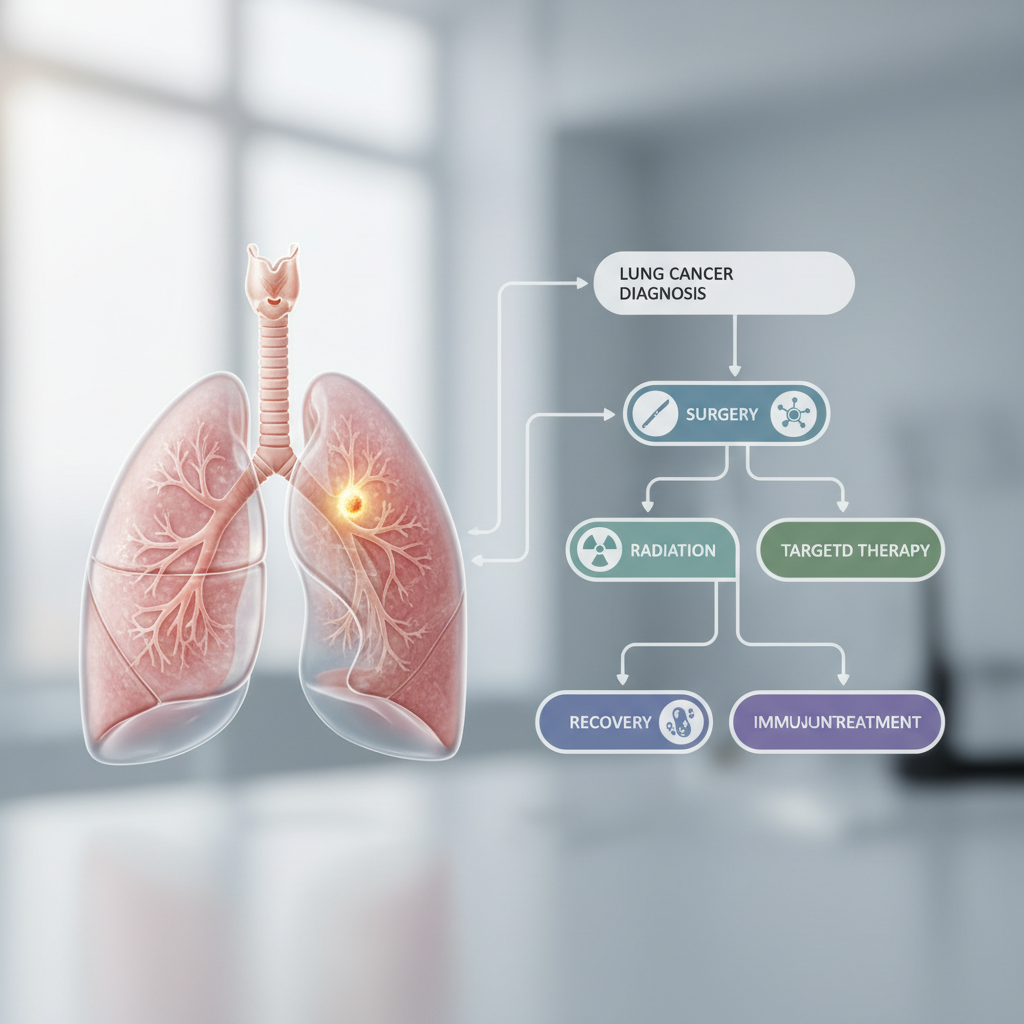
Understanding Lung Cancer Types and Targeted Therapies
Lung cancer isn't a single disease; it's a group of distinct cancers with different behaviors and ideal treatments. The two main types are small cell lung cancer (SCLC) and non-small cell lung cancer (NSCLC), with NSCLC accounting for about 85% of cases [2]. Within NSCLC, there are further subtypes like adenocarcinoma, squamous cell carcinoma, and large cell carcinoma.
Crucially, many lung cancers have specific genetic mutations or biomarkers that can be targeted by precise therapies. For example, mutations in EGFR, ALK, ROS1, BRAF, HER2, and others can be identified through genomic profiling [1, 3, 4]. Knowing your specific cancer's genetic fingerprint allows oncologists to select treatments, like tyrosine kinase inhibitors, that are often more effective and have fewer side effects than traditional chemotherapy. A second opinion ensures these critical molecular tests are performed and correctly interpreted.
The Role of Multidisciplinary Teams
Optimal lung cancer care today often involves a multidisciplinary team (MDT). This team typically includes thoracic surgeons, radiation oncologists, medical oncologists, pulmonologists, pathologists, radiologists, and supportive care specialists. Each member brings unique expertise to the table, and together, they collaboratively develop a comprehensive, personalized treatment plan.
When seeking a second opinion, you're not just getting one doctor's view; you're often tapping into the collective wisdom of an entire team at a specialized center. This collaborative approach minimizes oversights, maximizes treatment effectiveness, and integrates supportive care from the outset. Many institutions in or near Irvine have such multidisciplinary teams dedicated to lung cancer care.
When to Consider a Second Medical Opinion Irvine
While a second opinion can be beneficial at any point after a cancer diagnosis, certain circumstances particularly highlight its value. Don't hesitate to seek out new perspectives, as they can significantly impact your treatment journey.
After Your Initial Diagnosis
The period immediately following a lung cancer diagnosis is often filled with shock and questions. This is an ideal time to seek a second medical opinion. Having another specialist review your initial diagnostic reports – scans, biopsies, and pathology – can confirm the findings or provide additional nuance regarding the type and stage of your cancer [10].
This early review ensures that your treatment plan starts on the most solid foundation possible. It's much easier to refine a treatment strategy before it begins than to change course mid-treatment. Many patients find that going through this process helps them feel more empowered and actively involved in their care from the very beginning.
For Complex or Rare Cases
Lung cancer can present in many forms, some of which are particularly rare or complex. If your diagnosis involves a less common subtype, an unusual genetic mutation, or if your cancer is in an advanced stage, a second opinion from a highly specialized lung cancer expert is particularly important [8]. These experts often have experience with a wider range of cases and access to the latest research and clinical trials.
Some mutations, like certain ROS1 or HER2 alterations, have very specific targeted therapies that require an uncommon level of expertise to identify and manage [3, 4]. A second opinion can ensure that no stone is left unturned in finding the most innovative and effective treatment for your unique situation.
When Treatment Recommendations Differ or are Unclear
It's not uncommon for different doctors to recommend slightly different approaches, especially given the rapid evolution of lung cancer treatments. If you've received conflicting advice, or if any aspect of your proposed treatment plan feels unclear or doesn't sit right with you, a second opinion is highly advisable. This can help you understand the rationale behind each recommendation.
A second specialist can clarify the pros and cons of various options, discussing potential side effects, expected outcomes, and how each fits your personal priorities. This dialogue helps bridge any gaps in understanding and empowers you to make a choice that aligns with your values and goals. Remember, your comfort level with your treatment plan is a significant factor in your overall well-being.
Navigating Second Opinions in Orange County
Living in Orange County, you have access to excellent medical resources. Finding the right specialist for a second medical opinion for lung cancer in Irvine is a manageable process, especially with the right guidance.
Finding Lung Cancer Specialists in Irvine, CA
Orange County is home to several leading cancer centers and specialists. When searching for a lung cancer specialist in Irvine for a second opinion, look for board-certified oncologists who specialize in thoracic oncology or lung cancer. Many academic medical centers and specialized cancer clinics in the area, such as those associated with UCI Health or Providence, offer comprehensive lung cancer programs [7, 9].
Online resources, professional organizations, and patient advocacy groups can also provide directories of specialists. Don't hesitate to ask your primary care physician or initial oncologist for recommendations, as they often have networks of trusted colleagues. You can also explore our /find-specialist page for assistance.
Preparing for Your Second Opinion Appointment
To make the most of your second opinion appointment, thorough preparation is key. Gather all relevant medical records, including pathology reports, biopsy slides (often needing to be sent ahead), imaging disks (CT, PET scans, X-rays), and detailed notes from your initial consultations. Many facilities prefer these records to be sent in advance to allow the specialist time for a comprehensive review.
Prepare a list of questions you have, covering your diagnosis, staging, treatment options, potential side effects, and prognosis. Consider bringing a friend or family member to take notes and offer support. Remember, this appointment is your opportunity to gain clarity and confidence in your next steps. For quick questions before your appointment, our free Ask the Assistant chat (bottom right button) can offer instant, private guidance.
Frequently asked questions
Is it rude to ask my doctor for a second opinion?
Absolutely not! Most doctors understand and even encourage patients to seek a second opinion for serious diagnoses like lung cancer. They recognize the complexity of cancer care and want you to feel fully confident in your treatment decisions. It's a sign of proactive engagement in your health, not a lack of trust [10].
Will my insurance cover a second medical opinion for lung cancer?
Many insurance plans, including Medicare and most private insurance, cover second opinions for cancer diagnoses. However, it's always best to contact your insurance provider directly before scheduling an appointment to confirm your coverage and any specific requirements, such as a referral [9].
How quickly should I get a second opinion?
While there's no strict timeline, it's generally advisable to seek a second opinion as soon as possible after your initial diagnosis, especially before starting any major treatments. This allows ample time for record review and consultation without unduly delaying your care. However, it's never too late, even if you've already begun treatment.
What if the second opinion differs significantly from the first?
If you receive conflicting opinions, it can be unsettling. In such cases, it's often helpful to discuss the differences with both physicians, seeking clarification on their reasoning. You might also consider a third opinion to help reconcile the information. Remember, your ultimate decision should be based on what feels right and most appropriate for you and your situation.
Can a second opinion change my diagnosis or recommended treatment?
Yes, a second opinion can sometimes lead to a refined diagnosis, more accurate staging, or alternative treatment recommendations [10]. This is precisely the value of seeking another expert's perspective, as it can uncover new information or confirm that you are pursuing the best possible course of action.
What records do I need for a second opinion appointment?
You should arrange for all relevant medical records to be sent ahead of time. This includes pathology reports, actual biopsy slides, all imaging reports (CT, PET, MRI), imaging disks, and any operative notes or physician summaries from your initial evaluation [9]. Having these prepared streamlines the process.
When to call your care team
- If you're feeling overwhelmed or unclear about any aspect of your lung cancer diagnosis or treatment plan.
- If you experience new or worsening symptoms.
- If you're unsure about the side effects of your current treatment.
- Before making any significant decisions about your treatment path.
- If you need help gathering your medical records for a second opinion.
How Cancer Answers OC can help
At Cancer Answers OC, we understand the importance of making informed decisions when facing lung cancer. We are committed to empowering you with knowledge and connecting you to top lung cancer specialists in Irvine and across Orange County. Our platform can help you navigate the process of obtaining a second medical opinion lung cancer Irvine, ensuring you have access to comprehensive, evidence-based information.
We provide resources to help you find qualified specialists, understand complex medical information, and prepare for your consultations. Our goal is to support you every step of the way, offering clarity during a challenging time. Don’t hesitate to explore our /second-opinion resources or directly /contact us for personalized guidance. Plus, for instant, private answers to your questions, try our free Ask the Assistant chat available 24/7 – connecting you with live OC specialists when you need more detailed support.
Related resources
- Don’t Ignore the Whisper: Recognizing the Signs and Symptoms of Ovarian Cancer
- Understanding Melanoma Symptoms: Early Detection is Key
- Early Detection of Thyroid Cancer Symptoms in Anaheim: A Caregiver's Guide
- Find a cancer specialist in Orange County
- Get a second opinion
- Insurance and coverage guide
Sources
- Trastuzumab Deruxtecan for ERBB2-Mutant Metastatic Non-Small ... URL: https://pubmed.ncbi.nlm.nih.gov/41222935/
- Lung cancer screening completion among patients using decision aids URL: https://pubmed.ncbi.nlm.nih.gov/40100526/?utm_source=no_user_agent&utm_medium=rss&utm_campaign=pubmed-2&utm_content=1zQzz5Ri6T92YIKFTeKNDZXiUlOvdYX5WyEC-Yo8FexDO_uQU0&fc=20220216182039&ff=20250320035338&v=2.18.0.post9+e462414
- Taletrectinib in ROS1+ Non-Small Cell Lung Cancer - PubMed URL: https://pubmed.ncbi.nlm.nih.gov/40179330/?utm_source=FeedFetcher&utm_medium=rss&utm_campaign=pubmed-2&utm_content=1T3bNCPfE-4oTXou4MmcAo6EGORBIJKVerUFq_ls8QRUO7hsCt&fc=20210708192954&ff=20260228163340&v=2.19.0.post6+133c1fe
- Poziotinib in Non-Small-Cell Lung Cancer Harboring HER2 Exon 20 ... URL: https://pubmed.ncbi.nlm.nih.gov/34843401/
- Receptor Tyrosine Kinase Fusion-Mediated Resistance to EGFR TKI ... URL: https://pubmed.ncbi.nlm.nih.gov/39622411/?utm_source=FeedFetcher&utm_medium=rss&utm_campaign=None&utm_content=0nK-FGmcPzruPpJferMpyd8mRld7hsB1ra05TRUDXN6&fc=None&ff=20241203021817&v=2.18.0.post9+e462414
- The Clinical Use of Genomic Profiling to Distinguish Intrapulmonary ... URL: https://pubmed.ncbi.nlm.nih.gov/25911330/
- Cancer Care Second Opinions | UCI Health | Orange County, CA URL: https://www.ucihealth.org/medical-services/programs/cancer-second-opinion-services
- Second Opinion Program - ALK Positive URL: https://alkpositive.org/living-with-alk/second-opinion-program/
- Getting a Second Opinion - Cancer Orange County - Providence URL: https://www.providence.org/locations/socal/cancer-orange-county/second-opinion
- Why Getting a Second Opinion for Cancer Diagnosis Matters URL: https://cancercenterforhealing.com/second-opinion-for-cancer-diagnosis/