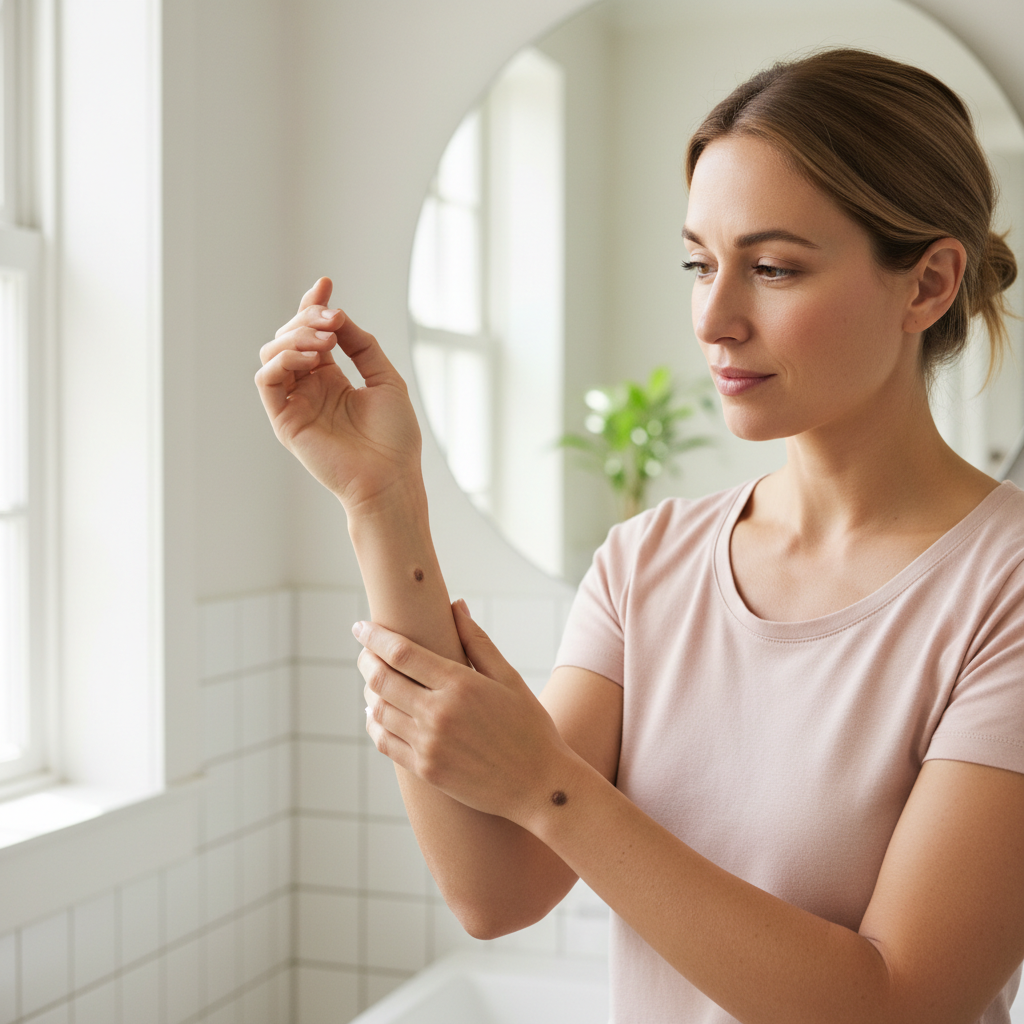
Melanoma, a serious form of skin cancer, can be highly curable when detected early. Knowing what to look for and performing regular skin self-exams are crucial steps in protecting your health. This article empowers you with the knowledge to recognize potential warning signs and understand when to seek medical advice.
Catching melanoma early can make a significant difference in treatment outcomes and survival rates. By understanding melanoma symptoms and practicing early detection strategies, you can take an active role in your skin health. We'll guide you through recognizing suspicious skin changes and emphasize the importance of timely consultations with your healthcare provider.
At a glance
| Detail | Summary |
|---|---|
| Topic | understanding melanoma symptoms early detection |
| Who it is for | Referring clinicians |
| Area served | Orange County, California |
| Category | patient-education |
| Reading time | About 13 minutes |
| Cited sources | 6 |
| Last reviewed | 2026-06-01 |
Key takeaways
- Regular skin self-exams are vital for understanding melanoma symptoms and early detection.
- The "ABCDE" rule helps identify suspicious moles: Asymmetry, Border, Color, Diameter, Evolving.
- Melanoma can appear a variety of ways; it's not always dark or a traditional mole.
- Professional skin checks, especially in high-risk individuals, are critical for timely diagnosis.
- Prompt medical evaluation of any new, changing, or unusual spots drastically improves prognosis.
Why early detection matters for melanoma
Melanoma is the most aggressive form of skin cancer, but when caught early, before it has a chance to spread, it is often curable [1]. The skin is the body's largest organ, and its accessibility allows for regular self-assessment, offering a unique opportunity for early identification of potential issues. This proactive approach is your strongest defense against advanced melanoma.
Ignoring suspicious skin changes can lead to the cancer penetrating deeper into the skin and potentially spreading to other parts of the body, making treatment more complex and less effective. That's why understanding melanoma symptoms and acting promptly is so important.
The impact of timely diagnosis
When melanoma is detected at an early stage, localized to the skin's surface, surgical removal often provides a complete cure [3]. The prognosis significantly improves with early intervention, highlighting the critical role of self-awareness and regular professional screenings.
Consider the difference: a small, early-stage melanoma might only require a simple outpatient procedure. A later-stage melanoma, however, could necessitate extensive surgery, radiation, chemotherapy, or immunotherapy, with a more uncertain outcome. Early detection can truly be a lifesaver.
Your role in self-screening
You are your own best advocate when it comes to skin health. Regular, thorough self-examinations allow you to become familiar with your skin's unique patterns of moles and blemishes. This familiarity helps you notice any new growths or changes in existing ones that might signal an issue [4].
Think of it as a natural extension of your daily self-care routine. Just as you might check your teeth or hair, dedicate time to examining your skin. This simple habit can empower you to identify potential problems and seek professional advice early.
What do melanoma spots look like? The ABCDEs
Recognizing melanoma can be challenging because it can present in various ways. However, a universally accepted guide, the ABCDE rule, greatly simplifies the process of identifying suspicious moles or lesions [6], [8]. This mnemonic helps you remember the key characteristics to look for during your skin checks.
It's important to remember that not every mole fitting these criteria is melanoma, but any spot with one or more of these features warrants professional evaluation. Consider these as red flags that signal a need for closer inspection by a dermatologist or your primary care physician.
Asymmetry (A)
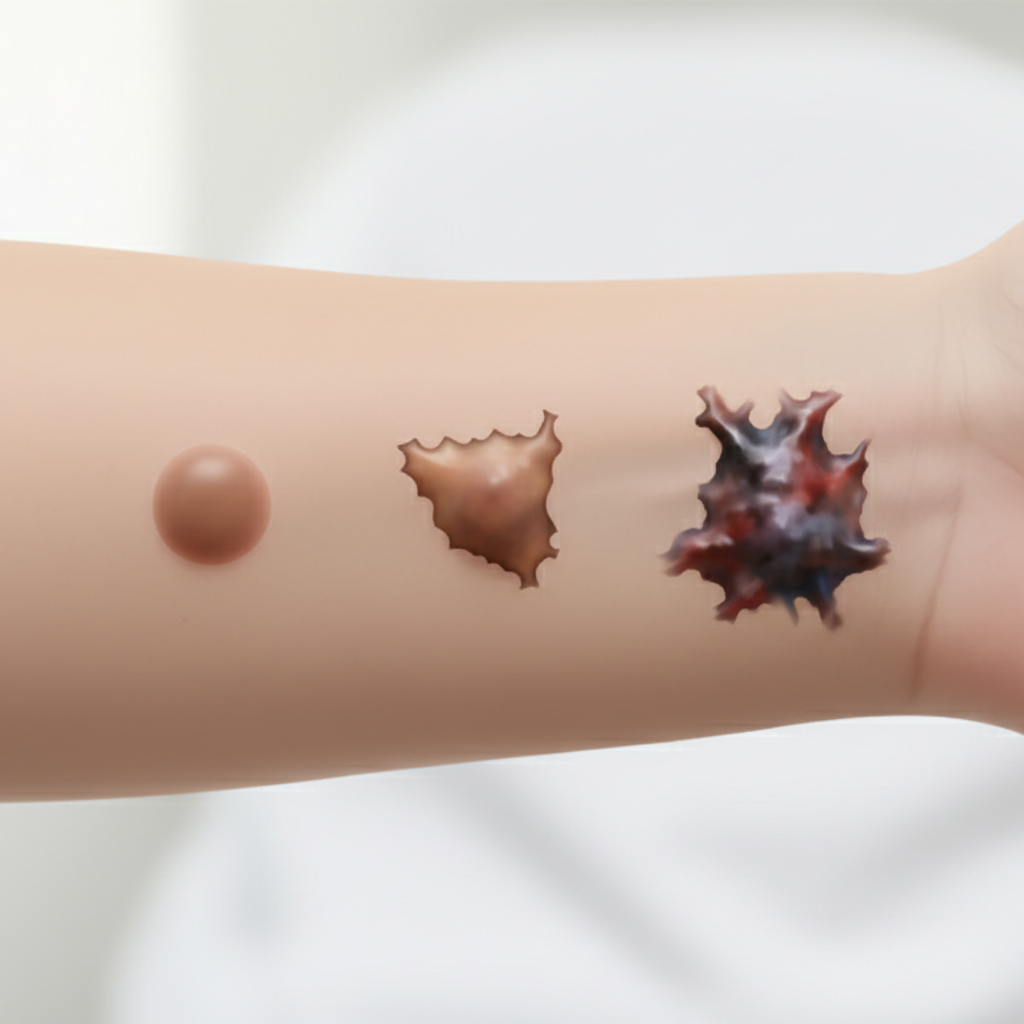
Imagine drawing a line through the middle of a mole. If one half does not match the other, meaning it's not symmetrical, that's a sign to watch for [6]. Benign moles are typically symmetrical, round, or oval.
This unevenness can be subtle. It might be that one side is noticeably larger, or the shape of one half is entirely different from the other. This lack of balance is a key indicator of potential melanoma.
Border (B)
The borders of early melanoma spots tend to be irregular, ragged, notched, or blurred [6]. In contrast, benign moles usually have smooth, well-defined borders.
Pay close attention to any mole where the edges seem to fray or blend indistinctly into the surrounding skin. This jagged or indistinct border is a significant warning sign that needs professional review.
In-depth look
Color (C)
A mole with uneven color, or multiple shades of brown, tan, black, red, white, or blue, is a common melanoma symptom [6], [8]. Healthy moles typically have a uniform color throughout.
Melanoma can display a striking variety within a single lesion, from light browns to deep blacks, sometimes even with hints of red or blue. This multi-colored appearance is a strong indicator of an atypical mole.
Diameter (D)
Melanomas are often, but not always, larger than 6 millimeters (about the size of a pencil eraser) when detected [6], [8]. While size isn't the only factor, a larger diameter should raise a flag, especially if combined with other ABCDE characteristics.
It's crucial to remember that some melanomas can be smaller than 6mm, particularly in their very early stages. Therefore, never dismiss a small spot if it exhibits other suspicious features but has not yet reached the typical diameter threshold.
Evolving (E)
Perhaps the most critical sign is evolution or change in a mole's size, shape, color, elevation, or any new symptoms like itching, tenderness, or bleeding [6], [7]. Any change over time is a significant warning sign and should be evaluated promptly.
This 'evolving' characteristic refers to any alteration you notice in a mole. It could be a change in how it feels, how it looks, or if it starts to itch, bleed, or crust. It's often the most reliable indicator that something is amiss. Consistent changes in an Orange County resident's mole, especially given our ample sunshine, should always prompt a visit to a specialist.
Beyond the ABCDEs: other important signs
While the ABCDEs provide an excellent framework for understanding melanoma symptoms, melanoma doesn't always fit neatly into these categories. There are other warning signs and less common presentations that you should be aware of. Being vigilant about any persistent, unusual changes on your skin is paramount.
Some melanomas, for example, may not be darkly pigmented, making them harder to identify using the 'color' rule. Others may appear as persistent sores or bumps that don't heal. Knowledge of these varied presentations further reinforces the need for consistent self-checks and professional evaluations.
Amelanotic melanoma: when it's not dark
"Is melanoma always dark?" is a common and important question. The answer is no. Amelanotic melanoma is a type of melanoma that lacks pigment, meaning it can appear as a pink, red, or even skin-colored lesion [3]. This type can be particularly challenging to identify because it doesn't present with the typical dark coloration associated with moles.
Because of its subtle appearance, amelanotic melanoma is sometimes mistaken for benign conditions like scars, eczema, or non-melanoma skin cancers. This highlights the importance of the 'E' for 'Evolving' in the ABCDE rule and seeking medical attention for any non-healing sores or unusual bumps.
Nodular melanoma: often raised and rapidly growing
Nodular melanoma is an aggressive form of melanoma that often grows rapidly and appears as a raised, firm, dome-shaped lump [2]. These lesions can be uniform in color (often dark blue-black, but sometimes red or skin-colored) and may not display all the classic ABCDE characteristics, especially asymmetry or irregular borders [2].
The key warning signs for nodular melanoma include a rapid growth rate and often a symmetrical, elevated appearance [2]. If you notice a new, raised lesion that feels firm, especially if it's growing quickly, seek immediate medical attention. It might also bleed or ulcerate, another critical sign.
Performing effective skin checks for melanoma at home
Regular skin self-examinations are an incredibly powerful tool in understanding melanoma symptoms and ensuring early detection. By taking the time to thoroughly inspect your skin once a month, you become intimately familiar with your body's unique landscape of moles, freckles, and blemishes. This familiarity empowers you to quickly spot any new growths or changes in existing ones.
Consider carving out a dedicated time once a month, perhaps after a shower, to perform this important check. The goal isn't to diagnose yourself, but to identify anything suspicious that warrants a professional opinion. For personalized guidance on this process, consider using the free Ask the Assistant chat available on our website, offering instant, private, 24/7 support.
Step-by-step guide to self-examination
- Gather your tools: You'll need a full-length mirror, a hand mirror, and good lighting [4]. Consider taking photos of suspicious moles over time to track changes.
- Start from the top: Begin with your head and face, including your scalp (part your hair), ears, nose, mouth, and neck. Use the hand mirror for hard-to-see areas.
- Check your torso: Examine your chest, abdomen, and back. Use the hand mirror to view your back and buttocks. Lift breasts to check underneath.
- Inspect your arms and hands: Look at your arms, armpits, and hands, checking both palms and the backs of your hands, under your fingernails.
- Examine your legs and feet: Check your legs, including the front and back, and your groin area. Finish by inspecting your feet, including the soles, between your toes, and under your toenails.
Tracking changes and when to be concerned
Keep a vigilant eye on any spots that change in size, shape, color, or elevation. Also, be concerned about any new growths, sores that don't heal, or spots that itch, bleed, or become tender [9]. These changes are often the most reliable indicators of melanoma [7].
If you find anything concerning during your self-examination, don't panic, but don't delay in seeking a professional medical opinion. Early action is key, and it's always better to be safe than sorry when it comes to potential melanoma symptoms. Remember, catching it early can significantly improve outcomes, especially for residents in sun-drenched Orange County.
Risk factors and prevention in Orange County
Living in sunny Orange County means we often have increased exposure to ultraviolet (UV) radiation, a primary risk factor for melanoma [10]. While some risk factors like genetics are unchangeable, many others are within your control. Understanding these factors allows you to take proactive steps to reduce your risk and enhance your understanding of melanoma symptoms.
Prevention is always better than cure, and by minimizing your exposure to harmful UV rays, you can significantly lower your chances of developing melanoma. This is particularly relevant for those living in or visiting coastal areas like Newport Beach.
Who is at higher risk?
Certain individuals have a higher risk of developing melanoma. These include people with fair skin, a history of sunburns (especially severe, blistering ones in childhood), numerous moles (over 50), atypical moles, a family history of melanoma, or a weakened immune system [5].
If you fall into one or more of these categories, routine skin checks by a dermatologist become even more critical, in addition to your monthly self-exams. Discuss your personal risk factors with your healthcare provider to determine the most appropriate screening schedule for you.
Sun protection strategies for OC residents
Protecting your skin from the sun is the most effective way to prevent melanoma. This includes seeking shade, especially during peak UV hours (10 AM to 4 PM), wearing protective clothing (long sleeves, wide-brimmed hats, UV-blocking sunglasses), and generously applying broad-spectrum sunscreen with an SPF of 30 or higher [10]. Reapply sunscreen every two hours, or more often if swimming or sweating.
Avoid indoor tanning beds entirely, as they emit harmful UV radiation that significantly increases melanoma risk. By adopting these simple yet powerful sun-safe behaviors, you can enjoy the beautiful Orange County outdoors responsibly while significantly reducing your melanoma risk.
Frequently asked questions
What are the earliest signs of melanoma I should look for?
The earliest signs of melanoma often involve a change in an existing mole or the appearance of a new, unusual spot. Look for the ABCDE warning signs: Asymmetry, irregular Border, varied Color, Diameter larger than 6mm, and any Evolving changes in size, shape, or symptoms like itching or bleeding [6].
Is melanoma always dark, or can it be other colors?
No, melanoma is not always dark. While many melanomas are black or brown, a type called amelanotic melanoma can be pink, red, or even skin-colored. These cases can be harder to identify due to their lack of typical pigmentation [3]. Any new, unusual, or changing skin lesion, regardless of color, warrants medical evaluation.
How often should I perform a skin check for melanoma at home?
It's recommended to perform a thorough skin self-examination once a month. This regular practice helps you become familiar with your skin's normal appearance and makes it easier to notice any new or changing spots [4]. If you have many moles or a higher risk, your doctor might recommend more frequent checks.
What's the difference between a normal mole and a suspicious mole?
Normal moles typically have symmetrical shapes, smooth and even borders, uniform color, and a diameter generally less than 6mm, remaining stable over time. Suspicious moles, on the other hand, often display one or more of the ABCDE characteristics: asymmetry, irregular borders, varied color, larger diameter, or any signs of evolution or change [6].
When should I see a doctor about a mole?
You should see a doctor immediately if you notice any new mole that develops concerning features, or any existing mole that changes in size, shape, color, or elevation. Also seek medical attention for moles that start to itch, bleed, crust, or become tender [9]. It’s always best to err on the side of caution.
Can UV exposure in Orange County increase my melanoma risk?
Yes, prolonged and unprotected UV exposure, whether from sun or tanning beds, significantly increases your risk of melanoma. Given the sunny climate in Orange County, it's crucial to practice diligent sun protection, including seeking shade, wearing protective clothing, and using broad-spectrum sunscreen daily, to minimize this risk [10].
When to call your care team
Don't hesitate to reach out to your healthcare provider if you notice any of the following:
- A new mole or skin lesion that is unusual or concerning.
- Any changes in an existing mole (size, shape, color, elevation).
- A mole or spot that becomes asymmetrical, has irregular borders, or uneven color.
- A mole with a diameter larger than 6mm, or that is evolving in any way.
- Any skin lesion that bleeds, itches, is tender, or fails to heal.
- If you have a strong family history of melanoma or numerous atypical moles and are due for a professional skin check. You can ask for a referral to one of our specialists at /find-specialist.
How Cancer Answers OC can help
At Cancer Answers OC, we understand the importance of understanding melanoma symptoms early detection. Our network of compassionate, highly skilled oncologists and dermatologists in Orange County is dedicated to providing personalized, evidence-based care. We offer comprehensive skin cancer screenings, advanced diagnostic services, and personalized treatment plans tailored to your unique needs.
If you're concerned about a suspicious mole or require a second opinion, we encourage you to schedule a consultation with one of our specialists. Visit us at /contact to connect with our team today. Remember, our free Ask the Assistant chat, available 24/7 on our website, can also provide instant, private answers to your general questions and connect you to live Orange County specialists when needed.
Related resources
- Don’t Ignore the Whisper: Recognizing the Signs and Symptoms of Ovarian Cancer
- Understanding Lymphoma Types and Treatment in Irvine: A Caregiver's Guide
- Early Detection of Thyroid Cancer Symptoms in Anaheim: A Caregiver's Guide
- Find a cancer specialist in Orange County
- Get a second opinion
- Insurance and coverage guide
Sources
- Advances in Early Detection of Melanoma and the Future of ... - PMC: https://pmc.ncbi.nlm.nih.gov/articles/PMC10145469/
- Patient-identified early clinical warning signs of nodular melanoma: https://pmc.ncbi.nlm.nih.gov/articles/PMC8028760/
- Clinical Presentation and Staging of Melanoma - NCBI - NIH: https://www.ncbi.nlm.nih.gov/books/NBK481857/
- Melanoma: Learn More – Detecting melanoma - InformedHealth.org: https://www.ncbi.nlm.nih.gov/books/NBK321126/
- Cutaneous Malignant Melanoma: A Review of Early Diagnosis and ...: https://pmc.ncbi.nlm.nih.gov/articles/PMC7935621/
- Symptoms of Skin Cancer - CDC: https://www.cdc.gov/skin-cancer/symptoms/index.html
- Melanoma Warning Signs and Images: https://www.skincancer.org/skin-cancer-information/melanoma/melanoma-warning-signs-and-images/
- How to Spot Melanoma: The Early Warning Signs of Skin ...: https://ahs.atlantichealth.org/about-us/stay-connected/news/content-central/2023/how-to-spot-melanoma--the-early-warning-signs-of-skin-cancer.html
- Melanoma Monday: Signs of Skin Cancer You Shouldn't ...: https://www.mtlda.com/blog/melanoma-monday-early-warning-signs-that-could-save-your-life
- Melanoma - Symptoms and causes: https://www.mayoclinic.org/diseases-conditions/melanoma/symptoms-causes/syc-20374884