
Are you or a loved one approaching 45? If so, understanding the updated colon cancer screening age guidelines is crucial. This shift aims to detect colon cancer earlier, improving outcomes and offering more treatment options.
This article will explain why the recommended screening age changed, who should consider earlier screening, and what options are available, ensuring you have the knowledge to protect your health or the health of someone you care about.
Key takeaways
- The recommended colon cancer screening age for individuals at average risk has changed from 50 to 45.
- This change is due to a worrying rise in colorectal cancer diagnoses among younger adults.
- Several effective screening options exist, from colonoscopies to at-home stool tests.
- Early detection is vital, as it allows for removal of precancerous polyps, often preventing cancer from developing.
- Family history and certain risk factors mean some individuals need to start screening even earlier than 45.
The New Standard: Colon Cancer Screening Age at 45
It can be unsettling when medical advice changes, especially for something as important as cancer screening. For years, the general recommendation for starting colon cancer screening was age 50. However, major health organizations, including the American Cancer Society (ACS) and the U.S. Preventive Services Task Force (USPSTF), have updated their guidelines [1, 5, 11]. They now recommend that individuals at average risk begin colon cancer screening at age 45 [7].
This isn't a change made lightly. It reflects a growing concern among medical professionals about the increasing incidence of colorectal cancer in younger populations, sometimes referred to as early-onset colorectal cancer [3, 8]. Studies have shown a significant rise in diagnoses for individuals under 50, making this adjustment a proactive measure to save lives.
Why the Shift? Rising Rates in Younger Adults
The primary driver behind the new screening guidelines is a notable and alarming trend: colorectal cancer is no longer just a disease of older age. Data indicates that over 10% of colorectal cancer cases in the U.S. are diagnosed in people under 50 [11]. The incidence of young-onset rectal cancer, in particular, has nearly doubled compared to young-onset colon cancer [11].
This increase is not fully understood but points to the need for earlier detection. Catching cancer when it's still a polyp or in its very early stages dramatically improves treatment success rates and survival. By lowering the recommended screening age, medical experts hope to intervene sooner, preventing the disease from progressing to more advanced stages.
Understanding "Average Risk"
When we talk about "average risk," we're referring to individuals who do not have a personal history of colorectal cancer or certain types of polyps, a family history of colorectal cancer, or specific genetic syndromes like Lynch syndrome or familial adenomatous polyposis (FAP) [2]. They also don't have inflammatory bowel disease (Crohn's disease or ulcerative colitis) [12]. If any of these factors apply to you, you may be considered at higher risk, and your doctor might recommend starting screening even earlier than 45.
Who Needs Earlier Screening? High-Risk Individuals
While the new guideline sets the average colon cancer screening age at 45, it’s important to remember that this is a general recommendation. For some individuals, screening should begin much sooner due to specific risk factors. Identifying these factors is a critical step in personalizing your preventative care.
Family History: A Strong Indicator
One of the most significant risk factors for colorectal cancer is a family history of the disease. If you have a first-degree relative (parent, sibling, or child) who had colorectal cancer or advanced polyps, your risk increases [2]. The younger your relative was when diagnosed, the higher your risk. In such cases, your doctor might recommend starting screening 10 years before the age your youngest affected family member was diagnosed, or even earlier, depending on specific guidelines and your personal situation.
For example, if your father was diagnosed with colon cancer at age 48, your screening might start as early as 38. It’s essential to have a detailed conversation with your healthcare provider about your family's medical history to determine the most appropriate screening timeline for you. You can find out more about personalized care and connect with specialists through our /find-specialist tool.
Genetic Syndromes and Inflammatory Bowel Disease
Certain genetic conditions significantly elevate your risk of developing colorectal cancer. These include Lynch syndrome (hereditary nonpolyposis colorectal cancer or HNPCC) and Familial Adenomatous Polyposis (FAP) [2]. Individuals with these syndromes often require very early and frequent screening, sometimes starting in their teens or early twenties. Genetic counseling and testing can help identify if you carry these genes.
Additionally, if you have a chronic inflammatory bowel disease, such as Crohn's disease or ulcerative colitis, your risk of colorectal cancer is higher [12]. The duration and extent of your disease influence this risk. Your gastroenterologist will develop a specialized surveillance plan for you, which typically involves regular colonoscopies at shorter intervals than for the average-risk population. To explore how a second opinion can help tailor your screening plan, visit our /second-opinion page.
Other Risk Factors to Consider
Beyond family history and genetic syndromes, other factors can influence your personal risk and may prompt earlier screening. These include a personal history of radiation to the abdomen or pelvis for a prior cancer, being of African American descent (who have a higher incidence and mortality rate from colorectal cancer) [4], and certain lifestyle factors such as obesity, smoking, excessive alcohol consumption, and a diet high in red and processed meats [5]. Discuss all your risk factors with your doctor, even those that seem minor, as they collectively paint a picture of your individual screening needs.
Screening Options: More Than Just a Colonoscopy
When your doctor recommends colon cancer screening, you might immediately think of a colonoscopy. While it is considered the gold standard, it's not the only option. Advancements in medical science have provided a variety of screening tests, each with its own benefits and considerations [1, 9]. Understanding these options can help you and your doctor choose the best approach for your health and lifestyle.
Colonoscopy: The Gold Standard
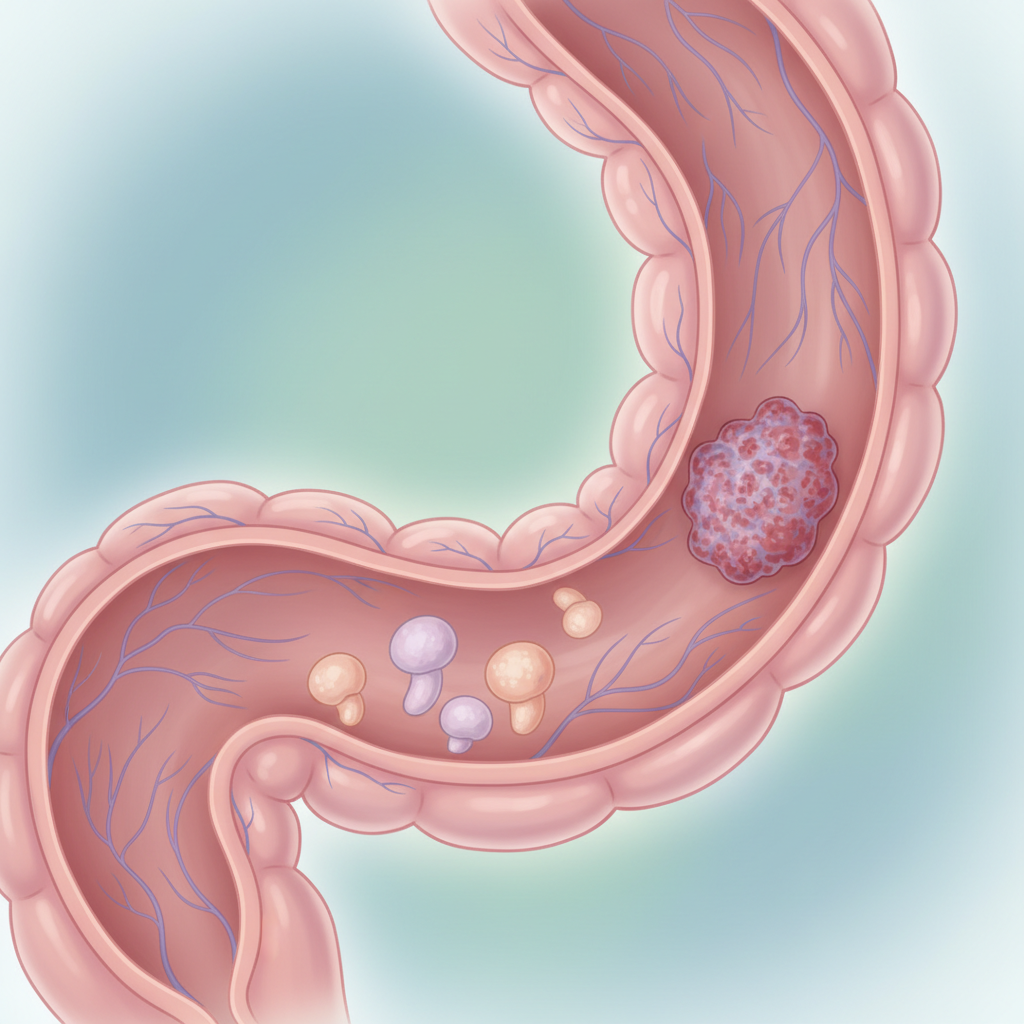
A colonoscopy is an examination of the entire colon and rectum using a long, flexible, lighted tube with a camera at its tip [12]. During the procedure, the doctor can not only visualize the lining of the colon but also remove any suspicious polyps or tissue for biopsy. This is a key advantage: polyps, which are small growths, can be removed before they have a chance to turn into cancer [1]. If no polyps are found, and you are at average risk, a repeat colonoscopy is typically recommended every 10 years [9].
While effective, a colonoscopy requires a thorough bowel preparation the day before, involves sedation, and is an invasive procedure. However, for many, the peace of mind knowing that precancerous lesions have been removed makes it a preferred choice.
Stool-Based Tests: Convenient at-Home Options
For those who prefer a less invasive approach, several stool-based tests can detect signs of colorectal cancer from a sample collected at home [1, 4]. These tests are designed to look for blood in the stool or altered DNA that might indicate the presence of cancer or advanced polyps.
- Fecal Immunochemical Test (FIT): This test checks for hidden blood in the stool, which can be a sign of polyps or cancer. It's done annually [9].
- Guaiac-based Fecal Occult Blood Test (g-FOBT): Similar to FIT, this test also looks for hidden blood but uses a chemical reaction. It's also typically done annually [9].
- Multi-target stool DNA test (mt-sDNA, e.g., Cologuard): This test combines a search for altered DNA (from cancerous cells or advanced polyps) with a test for blood in the stool. It's typically performed every three years [9].
Stool-based tests are convenient and non-invasive, but if a test comes back positive, a follow-up colonoscopy is usually required to investigate the cause [1]. They are effective at detecting cancer, but generally less effective at detecting precancerous polyps compared to a colonoscopy.
Other Screening Methods: A Closer Look
Beyond colonoscopies and stool tests, other methods exist, though they are often used in specific circumstances or as alternatives when a colonoscopy is not feasible:
- CT Colonography (Virtual Colonoscopy): This is a computed tomography (CT) scan that creates detailed images of the colon and rectum [4]. It requires bowel prep similar to a colonoscopy but does not involve sedation or insertion of a scope. If abnormalities are found, a standard colonoscopy is still needed. It's typically done every 5 years [9].
- Flexible Sigmoidoscopy: This procedure is similar to a colonoscopy but examines only the lower part of the colon (sigmoid colon and rectum) [4]. It can be done with less extensive bowel prep and often without sedation. However, it misses polyps or cancers in the upper colon. If no polyps are found, it's usually repeated every 5-10 years, or every 5 years if combined with a stool test [9].
Choosing the right screening method involves discussing your personal risk factors, preferences, and the pros and cons of each test with your doctor. Remember, the most effective screening test is the one that gets done.
The Importance of Early Detection: Why 45 Matters for Colon Cancer Screening Age
The update to the colon cancer screening age to 45 is a testament to the power of early detection. Unlike some cancers that develop rapidly, colorectal cancer often begins as benign polyps that slowly grow and can eventually turn cancerous [1]. This slow progression provides a valuable window of opportunity for intervention.
Preventing Cancer Before It Starts
The beauty of a colonoscopy, in particular, is its ability to be both a screening and a preventative tool. When a doctor performs a colonoscopy, they can identify and remove precancerous polyps before they become cancerous [1]. This is the ultimate form of prevention, effectively stopping cancer in its tracks. Stool tests, while not removing polyps, signal a need for further investigation, leading to their removal.
Consider the impact: if you wait until symptoms appear, the cancer may have already advanced, making treatment more complex and less successful. Symptoms like changes in bowel habits, blood in stool, abdominal discomfort, or unexplained weight loss often indicate a more advanced stage of the disease [1]. Starting screening at 45 allows for detection when polyps are small and easily removable, or when early-stage cancer is highly treatable.
Improved Treatment Outcomes and Survival Rates
When colorectal cancer is caught early, localized to the colon or rectum, the survival rates are significantly higher. For localized colorectal cancer, the 5-year survival rate is 91% [4]. This drops considerably once the cancer has spread to nearby organs or distant sites. The goal of early screening is to diagnose cancer at this localized stage, or even better, to prevent it entirely by removing polyps.
This is why Orange County cancer specialists emphasize proactive screening. By identifying and addressing precancerous conditions or early-stage cancers, we can improve long-term outcomes for countless individuals. Don't hesitate to reach out to local experts for guidance; you can even use our free Ask the Assistant chat (floating bottom-right button) for instant, private answers from an AI assistant trained by OC specialists, available 24/7.
Navigating Your Screening Journey in Orange County
Living in Orange County, you have access to excellent healthcare resources. Understanding how to navigate your personal colon cancer screening journey is straightforward, but it begins with a conversation with your primary care provider.
Talking to Your Doctor About Screening
The first step is always to consult your doctor. Be prepared to discuss your personal health history, any symptoms you may be experiencing, and your family's medical history, especially concerning colorectal cancer or polyps. This information will help your doctor assess your individual risk level and recommend the most appropriate screening schedule and method for you [2].
Don't be shy about asking questions. Inquire about the pros and cons of different screening tests, what to expect during the procedure (if you choose a colonoscopy), and any potential costs or insurance coverage [9]. Being informed empowers you to make the best decisions for your health.
What to Expect During a Colonoscopy
If a colonoscopy is recommended, understanding the process can ease any anxieties. The day before the procedure, you'll need to follow a special diet and drink a prescribed liquid to clean out your colon. This preparation is crucial for a clear view during the exam.
On the day of the procedure, you'll receive sedation, meaning you won't feel discomfort and likely won't remember the procedure itself. The colonoscopy typically takes 30-60 minutes. Afterward, you'll need someone to drive you home, and you'll rest for the remainder of the day. Your doctor will discuss the findings with you, often immediately after you wake up, and provide follow-up instructions.
Accessing Resources and Support
Cancer Answers OC is committed to providing valuable resources for caregivers and patients in Orange County. We offer articles like "What to Ask Your Doctor About Prostate Cancer Screening" and "Tumor Marker Blood Tests: What the Numbers Mean" that can further help you understand cancer prevention and detection. If you're considering a second opinion, especially for a complex diagnosis like lung cancer, our page on "Second Opinion Lung Cancer Treatment in Irvine, CA" might be helpful. Remember, early screening is a powerful tool against cancer, and with the new colon cancer screening age at 45, it’s more important than ever to be proactive.
Comparison of Colorectal Cancer Screening Options
Choosing the right colorectal cancer screening method can feel overwhelming, given the various options available. This table provides a quick reference to help you compare the primary screening tests based on several key factors. Remember to discuss these with your doctor to determine the best choice for your individual risk profile and preferences.
| Screening Method | Frequency (Average Risk) | Main Benefit | Main Drawback | Bowel Prep Required? | Sedation Required? | Ability to Remove Polyps? |
|---|---|---|---|---|---|---|
| Colonoscopy | Every 10 years | Detects & removes polyps; examines entire colon | Invasive, extensive prep, sedation | Yes | Yes | Yes |
| Multi-target Stool DNA (e.g., Cologuard) | Every 1-3 years | Non-invasive, at-home, high accuracy for cancer | Less sensitive for polyps, positive requires colonoscopy | No | No | No |
| Fecal Immunochemical Test (FIT) | Annually | Non-invasive, at-home, simple | Detects blood only, positive requires colonoscopy | No | No | No |
| Flexible Sigmoidoscopy | Every 5-10 years | Less invasive than colonoscopy, no sedation often | Only examines lower colon, misses upper polyps | Partial | No (usually) | Yes |
| CT Colonography (Virtual Colonoscopy) | Every 5 years | Non-invasive view of entire colon | Radiation exposure, positive requires colonoscopy | Yes | No | No |
Frequently asked questions
Is the colon cancer screening age of 45 mandatory?
No, it's a recommendation from leading health organizations like the American Cancer Society and the USPSTF for individuals at average risk. While not legally mandatory, it's a strong medical guideline to promote early detection and prevention. Your doctor will discuss the best plan for you.
What if I'm over 45 and haven't been screened yet?
It's never too late to start! If you're over 45 and haven't had a colorectal cancer screening, schedule an appointment with your doctor right away. They can help you catch up on screenings and discuss the best approach for your health.
Does insurance cover colon cancer screening at age 45?
Most insurance plans, including Medicare and private insurers, now cover colon cancer screening starting at age 45, often with no out-of-pocket costs for preventative screenings. However, it's always a good idea to confirm coverage details directly with your insurance provider.
What are the main symptoms of colon cancer I should watch for?
Common symptoms include a change in bowel habits (diarrhea, constipation, or narrowing of the stool lasting more than a few days), rectal bleeding or blood in your stool, persistent abdominal discomfort (cramps, gas, or pain), a feeling that your bowel doesn't empty completely, weakness or fatigue, and unexplained weight loss. It's crucial to note that many people with early-stage colon cancer have no symptoms, highlighting why screening is so important.
If my screening test is positive, does that mean I have cancer?
Not necessarily. A positive stool-based test, for example, often indicates the presence of blood or altered DNA, but it doesn't confirm cancer. It simply means a follow-up diagnostic test, typically a colonoscopy, is needed to investigate the cause and determine if polyps or cancer are present.
Can I choose which screening test I want?
While you can express your preference, the choice of screening test should be a shared decision between you and your doctor. They will consider your personal risk factors, health history, and the pros and cons of each test to recommend the most appropriate option for you.
When to call your care team
- You experience new or worsening abdominal pain or discomfort.
- You notice any blood in your stool, or black, tarry stools.
- You have unexplained changes in your bowel habits (e.g., persistent diarrhea or constipation).
- You have persistent fatigue, weakness, or unexplained weight loss.
- You have questions or concerns about your colon cancer screening results.
How Cancer Answers OC can help
At Cancer Answers OC, we understand that facing a cancer diagnosis or navigating screening decisions can be overwhelming, especially for caregivers. Our mission is to provide clear, human, and evidence-based information to empower you and your loved ones in Orange County.
We offer a wealth of patient-friendly articles, guides, and resources designed to help you understand complex medical topics. Whether you're looking for information on specific cancer types, treatment options, or caregiver support, you'll find it here.
For immediate, private answers to your questions, try our free Ask the Assistant chat. This AI-powered tool, trained by live Orange County specialists, is available 24/7 to provide instant, reliable information. And if you need to speak with a human expert or want to learn more about clinical trials, don't hesitate to /contact us directly or explore our /clinical-trials page.
Sources
- Screening for Colorectal Cancer – CDC.
- Colorectal Cancer Screening Guidelines – Facing Our Risk of Cancer Empowered (FORCE).
- Changing colon cancer screening guidelines to age 45: Has it made a difference? – PubMed.gov.
- Colorectal Cancer Screening – National Cancer Institute (NCI) Progress Report.
- American Cancer Society Guideline for Colorectal Cancer Screening – American Cancer Society (ACS).
- Final Recommendation Statement: Screening for Colorectal Cancer – U.S. Preventive Services Task Force (USPSTF).
- Colorectal Cancer Screening – StatPearls, NCBI Bookshelf.
- Colorectal cancer screening from 45 years of age: Thesis, antithesis and synthesis – PMC, NCBI.
- Colorectal Cancer Guideline | How Often to Have Screening Tests – American Cancer Society (ACS).
- Colorectal Cancer: Screening – United States Preventive Services Taskforce (USPSTF).
- Get Screened at 45 – Colorectal Cancer Alliance.
- Colorectal Cancer – American College of Gastroenterology.