
Navigating a cancer diagnosis often involves exploring all possible treatment avenues, including clinical trials. Understanding the journey of a new treatment through different clinical trial phases explained is key to making informed decisions and accessing cutting-edge care.
For clinicians, guiding patients through these options requires a deep understanding of how new therapies are developed and rigorously tested to ensure safety and effectiveness. This article breaks down the structured path new cancer treatments take, from initial laboratory studies to post-market monitoring, providing clarity on what each phase entails for patients in Orange County and beyond.
Key takeaways
- Clinical trials are essential for developing new, safer, and more effective cancer treatments.
- They progress through distinct phases (0, I, II, III, IV), each with specific goals for safety and efficacy.
- Patient safety is the top priority at every stage, with strict ethical guidelines and regulatory oversight.
- Not all cancer clinical trials involve placebos, especially when a standard, life-saving treatment already exists.
- Participating can offer access to innovative therapies, while also contributing valuable knowledge to medical science.
The Foundation: Why Clinical Trials Are Essential
When a patient faces cancer, the goal is always to find the most effective treatment with the fewest side effects. Clinical trials are the meticulously designed research studies that make this possible. They are the bedrock of medical advancement, allowing new drugs, surgeries, radiation techniques, and other therapies to be rigorously evaluated before they become standard care [1].
Think of it as a thorough vetting process. Before any new treatment can be widely used, it must pass through a series of carefully monitored steps to ensure it is both safe for patients and genuinely effective against cancer. This systematic approach protects patients and ensures that medical decisions are evidence-based.
The Purpose of Clinical Research
Clinical research involves human volunteers and aims to answer critical questions about medical interventions. These studies explore ways to prevent, detect, and treat various medical conditions, including cancer [4]. By participating, patients contribute to a larger body of knowledge that ultimately benefits countless others facing similar diagnoses.
Many modern cancer treatments, from targeted therapies to immunotherapies, are available today because of the dedication of clinical trial participants and researchers. These trials are critical bridges between scientific discovery in the lab and real-world patient care [7].
Preclinical Development: The Starting Line
Before a new drug or treatment ever reaches a human patient, it undergoes extensive preclinical testing. This stage involves laboratory studies on cells and animal models to assess potential harm and initial efficacy [2]. Researchers gather crucial data on how the treatment behaves and if it shows promise.
Only after satisfying stringent safety and efficacy criteria in preclinical studies can an investigational treatment move forward to human testing. This initial phase is vital for screening out compounds that are likely to be ineffective or too toxic, safeguarding potential human participants.
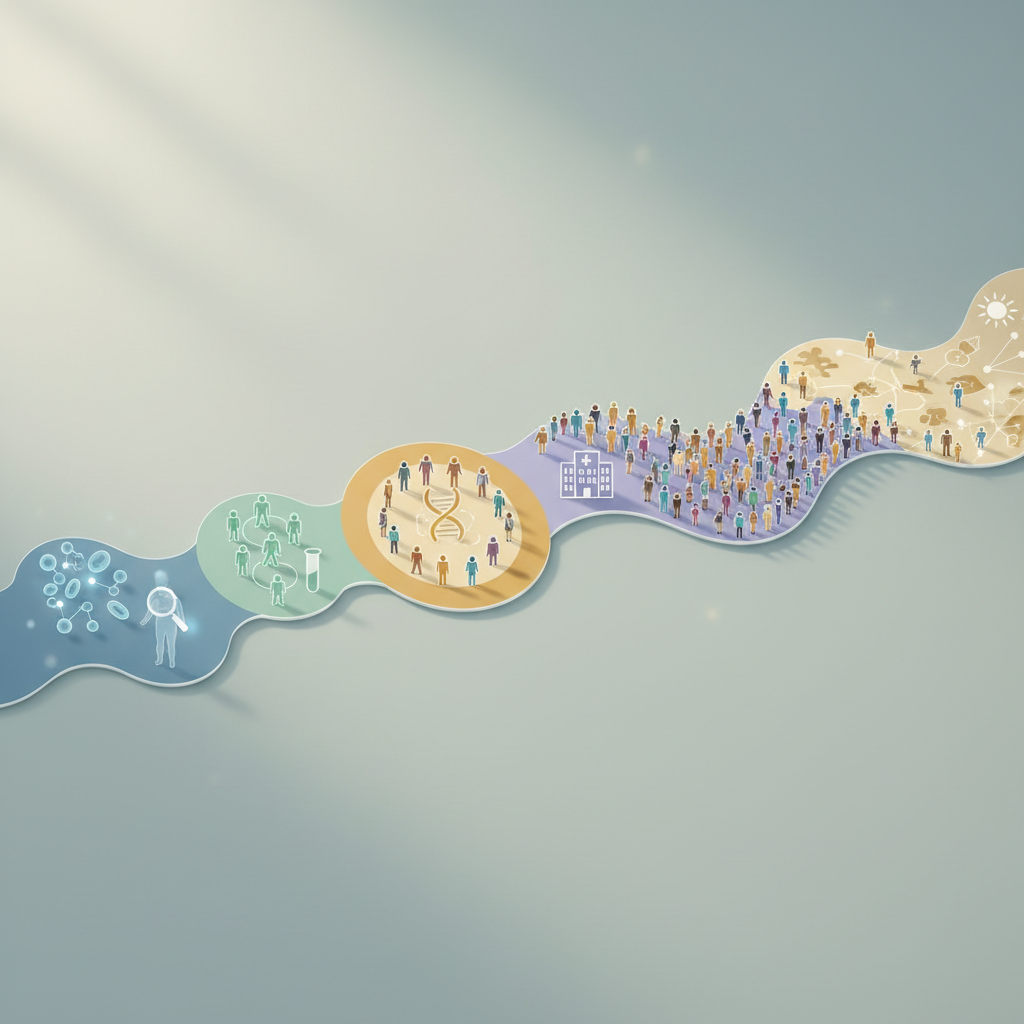
Understanding the Clinical Trial Phases Explained
Clinical trials are structured into distinct phases, each designed to answer specific questions about a new treatment. This progressive approach ensures that treatments are thoroughly vetted for safety and effectiveness before they become widely available [3]. Each phase builds upon the last, gathering more data and involving more participants.
It’s important to remember that patients typically participate in one phase of a study. While treatments progress through the phases, patients generally do not move from one phase to another within the same investigational treatment pathway [9].
Phase 0: Exploring Early Signals
Phase 0 trials are very small pilot studies, often involving fewer than 15 participants [9]. Their primary goal is to learn how a new drug is absorbed, distributed, metabolized, and excreted by the body (pharmacokinetics) at very low, non-therapeutic doses [3, 11]. This helps researchers confirm findings from preclinical studies and decide if the drug merits further investigation in humans.
These trials are short and do not typically measure treatment effectiveness. They are essentially an early safety and biological activity check, helping to accelerate the drug development process by identifying promising candidates or weeding out those unlikely to succeed early on. They are not always conducted for every new treatment.
Phase I: Safety and Dosing
Phase I trials are the first time a new cancer treatment is tested in humans, typically involving 20 to 100 people [5, 11]. The main objectives are to assess the treatment's safety, determine the optimal dosage, and identify potential side effects [3, 9]. Researchers start with very low doses and gradually increase them in small groups of patients, closely monitoring for any adverse reactions.
While safety is paramount, researchers also look for early signs that the treatment might have an anti-cancer effect. Patients in Phase I trials often have advanced cancer for which standard treatments have not been successful [11]. Participants in Orange County seeking to learn more about early-phase trials can often consult with specialists familiar with these studies. You can also contact us to learn more about local options.
Phase II: Efficacy and Further Safety
Once a treatment’s safety and optimal dose are established in Phase I, it moves to Phase II, involving a larger group of patients, usually between 100 to 300 individuals [4]. The primary goal of Phase II trials is to evaluate the treatment's effectiveness against a specific type of cancer and continue monitoring for side effects [3, 5, 9].
Researchers carefully measure tumor response and track how well the treatment controls the cancer. They also gather more detailed information about common and less common side effects. Many Phase II trials focus on one or two specific cancer types [3]. Patients exploring clinical trials for advanced ovarian cancer in Anaheim, for instance, might find opportunities in Phase II studies. You can read more about options like these by visiting Finding Hope in Anaheim: Clinical Trials for Advanced Ovarian Cancer.
Phase III: Comparison and Confirmation
Phase III trials are the most extensive, often involving hundreds or even thousands of patients [3, 5]. These trials compare the new treatment against the current standard treatment, or sometimes a placebo if no effective standard treatment exists [3, 9]. The goal is to confirm the new treatment is more effective, has fewer side effects, or offers a better quality of life than existing options.
These trials are usually randomized, meaning patients are assigned to different treatment groups by chance to ensure unbiased results. Successful completion of a Phase III trial is often required for a new drug to receive regulatory approval from agencies like the FDA [7, 10]. Patients interested in understanding more about joining a clinical trial in Orange County should consider visiting our comprehensive resource on Clinical Trials for Rare Cancer Types in Fullerton, California: Your Guide.
Phase IV: Post-Marketing Surveillance
Even after a treatment is approved and made available to the public, research continues in Phase IV trials. These post-market surveillance studies gather additional information on the treatment's long-term benefits, risks, and optimal use in diverse populations [3, 9]. They can also explore new uses for the approved treatment.
Phase IV trials might investigate rare side effects that only become apparent after a drug is used by a much larger patient population. They are crucial for continually refining our understanding of a treatment's full profile in the real world. This ongoing monitoring ensures continued patient safety and optimizes treatment strategies.
Navigating Common Concerns in Cancer Clinical Trials
It's natural to have questions and concerns when considering participation in a clinical trial. Many patients worry about safety, the use of placebos, and what their experience might be like. Understanding the realities behind these common concerns can help you make a more informed decision.
Cancer Clinical Trial Safety: A Top Priority
Patient safety is the cornerstone of all clinical trials. Extensive regulations and ethical guidelines are in place to protect participants [4]. Before any trial begins, an Institutional Review Board (IRB) or Ethics Committee, composed of doctors, statisticians, and community members, thoroughly reviews the study protocol to ensure risks are minimized and patient rights are protected [1].
Throughout the trial, participants are closely monitored by a dedicated care team. Any unexpected side effects or adverse events are immediately reported and evaluated. Patients can withdraw from a clinical trial at any time, for any reason, without impacting their standard medical care [12].
Placebo in Cancer Trials: Myth vs. Reality
One of the most common concerns is the fear of receiving a placebo instead of active treatment. It's important to understand that in cancer clinical trials, placebos are rarely used alone if an effective standard treatment already exists [3]. When used, a placebo is typically given in addition to, or in comparison with, the best available standard treatment, not as a replacement for it.
For example, a trial might compare a new drug plus standard therapy against a placebo plus standard therapy. This allows researchers to determine if the new drug adds a benefit. If no effective standard treatment is available, or if the trial is exploring a treatment for a condition where a placebo is ethically appropriate (e.g., symptom management), a placebo might be used. Your care team will always explain the trial design, including any potential use of placebos, as part of the informed consent process.
Informed Consent: Your Right to Know
Informed consent is a crucial ethical and legal process that ensures patients fully understand a clinical trial before deciding to participate. This involves providing detailed information about the study's purpose, procedures, potential risks and benefits, and alternative treatment options [12]. You'll have ample opportunity to ask questions and discuss the trial with your care team, family, and trusted advisors.
Only after you fully understand and agree to all aspects of the trial will you be asked to sign an informed consent document. This document is not a contract, and you retain the right to withdraw from the trial at any time without penalty. This process underscores the voluntary nature of participation and prioritizes your autonomy.
How to Join a Clinical Trial in Orange County
Deciding to join a clinical trial is a significant personal choice that involves careful consideration and discussion with your oncology team. If you're considering this option, especially in Orange County, several steps can help you navigate the process effectively. Remember, connecting with your care team and exploring local resources are crucial first steps.
Discussing with Your Oncology Team
Your primary oncologist is your most valuable resource when considering a clinical trial. They have a comprehensive understanding of your specific cancer type, medical history, and current health status. They can help you understand if a clinical trial is a suitable option for you and which trials might be most appropriate given your diagnosis and treatment goals. Don't hesitate to ask them about available trials, including those specific to Orange County or nearby regions.
Your oncologist can also help you understand the potential benefits and risks in the context of your individual situation. They can connect you with specialists who are running trials or refer you to institutions that actively conduct cancer research. For physicians looking to refer patients, our dedicated portal at /for-physicians/refer is available.
Finding Available Trials
There are several ways to search for active clinical trials. Websites like ClinicalTrials.gov, maintained by the U.S. National Library of Medicine, list privately and publicly funded clinical studies conducted around the world [1]. You can filter these searches by cancer type, location (such as Orange County), and trial phase.
Local cancer centers and hospitals in Orange County also often have their own clinical trial databases or dedicated research departments. Speaking with a patient navigator or research coordinator at these facilities can provide more personalized guidance on how to join a clinical trial that aligns with your needs. You can also use our free Ask the Assistant chat (floating bottom-right button) for instant answers or to connect with an OC specialist.
The Screening and Enrollment Process
Once a potential trial is identified, you will undergo a comprehensive screening process. This involves medical tests, evaluations, and a review of your medical history to ensure you meet the specific eligibility criteria for the trial. These criteria are in place to maximize participant safety and ensure the research produces meaningful results.
If you meet the criteria and provide informed consent, you will be officially enrolled. Throughout the trial, you'll have regular appointments, tests, and follow-ups with the research team. Remember, participation is always voluntary, and you can withdraw at any time. For those considering a second opinion to understand all their options, Cancer Answers OC provides resources at /second-opinion.
| Clinical Trial Phase | Primary Goal | Typical Patient Number | Key Characteristics |
|---|---|---|---|
| Phase 0 | Explore drug behavior at low doses | ~10-15 | Very short duration, non-therapeutic doses, not always conducted. |
| Phase I | Safety, dosage, side effects | 20-100 | First-in-human, dose escalation, closely monitored, early efficacy signals. |
| Phase II | Efficacy, further safety | 100-300 | Tests if treatment works against specific cancer, more detailed side effect data. |
| Phase III | Confirm efficacy vs. standard care | Hundreds to thousands | Randomized, comparative, often required for FDA approval. |
| Phase IV | Long-term safety, optimal use, rare effects | Thousands | Post-market surveillance, real-world data, ongoing monitoring. |

Frequently asked questions
What is the biggest difference between a Phase 1 vs Phase 3 trial?
The biggest difference between a Phase 1 vs Phase 3 trial lies in their primary goals and patient numbers. Phase 1 trials prioritize safety, determining the optimal dose, and identifying side effects in a small group (20-100 patients) [3, 11]. Phase 3 trials, on the other hand, compare the new treatment against existing standard treatments in a much larger group (hundreds to thousands of patients) to confirm efficacy and superiority [3, 9].
How long does each clinical trial phase typically last?
The duration of each clinical trial phase varies significantly. Phase 0 trials are very short, often days or weeks. Phase I trials usually last several months to a year. Phase II trials can range from several months to two years, while Phase III trials are typically the longest, often lasting several years [6]. Phase IV trials continue as long as the drug is on the market.
Can I participate in more than one clinical trial?
Generally, you can only participate in one clinical trial at a time. This is because participation in multiple trials simultaneously could confound results or pose additional safety risks. However, if you complete one trial, you might be eligible to enroll in another, provided you meet the specific eligibility criteria for the new study. Discussing this with your care team is essential.
What are the potential benefits of joining a clinical trial?
Joining a clinical trial can offer several benefits, including access to cutting-edge treatments not yet available to the public, close monitoring by a specialized care team, and the opportunity to play an active role in your health care [1]. You also contribute valuable knowledge that helps advance cancer research for future generations. For more information on finding a specialist to discuss these options, visit /find-specialist.
What are the potential risks of joining a clinical trial?
Potential risks in clinical trials include unexpected side effects from the new treatment, the possibility that the new treatment may not be effective for you, or that it might be less effective than standard therapy [12]. There can also be an increased time commitment for appointments and tests. Your care team will thoroughly explain all potential risks as part of the informed consent process.
Are clinical trials only for patients with advanced cancer?
No, clinical trials are not just for advanced cancer patients. While many Phase I trials involve individuals with advanced disease, trials are conducted across all stages of cancer, including prevention, early diagnosis, and adjuvant (post-surgery) settings. There are even trials for cancer survivors focused on quality of life and long-term side effect management.
When to call your care team
- You experience new or worsening side effects during a clinical trial.
- You have questions or concerns about your treatment or the trial protocol.
- You wish to withdraw from the study or discuss other treatment options.
- You notice any changes in your health that seem unusual.
- You need clarification on your informed consent or trial schedule.
How Cancer Answers OC can help
At Cancer Answers OC, we understand that a cancer diagnosis brings many questions and challenges. Our mission is to empower patients and their families in Orange County with clear, reliable, and compassionate information about cancer care, including the complex world of clinical trials. We connect you with trusted resources and specialists dedicated to finding the right path for you.
Our platform offers extensive articles, local resources, and the convenience of our free Ask the Assistant chat. This 24/7, private, and instant AI-powered tool can answer your general questions about cancer and clinical trials, and connect you with live Orange County specialists when you need more personalized guidance. We are here to support you every step of the way on your journey to comprehensive cancer care. We also offer detailed articles on trials in specific areas, such as Clinical Trials for Ovarian Cancer in Newport Beach: Your Guide to Emerging Treatments.
Sources
- The Basics — National Institutes of Health (NIH).
- Four Phases of Clinical Trials — Astellas.
- Phases of clinical trials — Cancer Research UK.
- What Are the Phases of Clinical Trials? — Advarra.
- How Clinical Trials Work — Pfizer.
- Clinical Trials and Clinical Research: A Comprehensive Review — PMC.
- Learning to Navigate the Four Phases of Clinical Trials — UCSD Extended Studies.
- Phases In Clinical Trials Explained by CRO Diagram Research — Diagram Research.
- Phases of Clinical Trials — MD Anderson.
- Step 3: Clinical Research — FDA.
- Trial Phases 1, 2 & 3 Defined — Clinical Research Management (CRM), University of Cincinnati.
- Phases of Clinical Trials — American Cancer Society.