
Receiving a thyroid cancer diagnosis for a loved one can bring many questions, especially about their future. Understanding thyroid cancer prognosis and survival rates is key to navigating this journey with confidence and support, whether you're in Mission Viejo or elsewhere. This guide for caregivers aims to demystify these terms, provide clear information on what to expect, and highlight the resources available to you and your family. We want to empower you with knowledge to advocate for the best possible care.
At a glance
| Detail | Summary |
|---|---|
| Topic | thyroid cancer prognosis survival rates Mission Viejo |
| Who it is for | Caregivers and family |
| Area served | Orange County, California |
| Category | patient-education |
| Reading time | About 12 minutes |
| Cited sources | 6 |
| Last reviewed | 2026-06-01 |
Key takeaways
- Thyroid cancer generally has a very favorable prognosis compared to many other cancers.
- Papillary and follicular thyroid cancers, the most common types, have high survival rates.
- Prognosis depends on factors like cancer type, stage, age, and individual response to treatment.
- Early detection and comprehensive care from a specialized team significantly improve outcomes.
- Support resources and detailed information, including specialist referrals in Orange County, are crucial for caregivers.
Understanding Thyroid Cancer: An Overview for Caregivers
When a loved one is diagnosed with thyroid cancer, it's natural to feel overwhelmed. As a caregiver, you play a crucial role in understanding their condition and supporting them through treatment. Thyroid cancer originates in the thyroid gland, a butterfly-shaped gland located at the base of the neck that produces hormones essential for regulating metabolism [7].
What is Thyroid Cancer?
Thyroid cancer occurs when cells in the thyroid gland grow abnormally. It's often highly treatable, especially when caught early. There are several types, each with different characteristics and prognoses, making accurate diagnosis vital for effective treatment planning.
Why is Prognosis Important for Caregivers?
Understanding the prognosis, or the likely course of a disease, helps you prepare for the future, make informed decisions, and manage expectations. While statistics offer a general outlook, remember that each patient's journey is unique. Your loved one's care team in Mission Viejo will provide personalized information based on their specific situation.
What are Thyroid Cancer Survival Rates?
Survival rates are statistics that tell you the percentage of people with a certain type and stage of cancer who are still alive for a period of time (usually 5 years) after diagnosis. These rates are based on large groups of people and cannot predict individual outcomes, but they offer a general idea of the thyroid cancer prognosis [9].
How Survival Rates are Measured
Cancer survival is often presented as a 5-year relative survival rate. This compares people with a specific cancer to people in the general population without that cancer. For example, a 95% 5-year relative survival rate means people with the cancer are 95% as likely to be alive five years after diagnosis as people who don't have the cancer [9]. It’s important to note that these statistics do not mean someone only lives for 5 years; many live much longer.
General Outlook for Thyroid Cancer
Overall, thyroid cancer has one of the best prognoses among all cancers. This is largely due to the high survival rates of the most common types. For all types and stages of thyroid cancer combined, the 5-year survival rate can be very encouraging, often exceeding 98% for localized disease [8]. Specific rates vary significantly by type and stage, which we will explore further.
Types of Thyroid Cancer and Their Prognoses
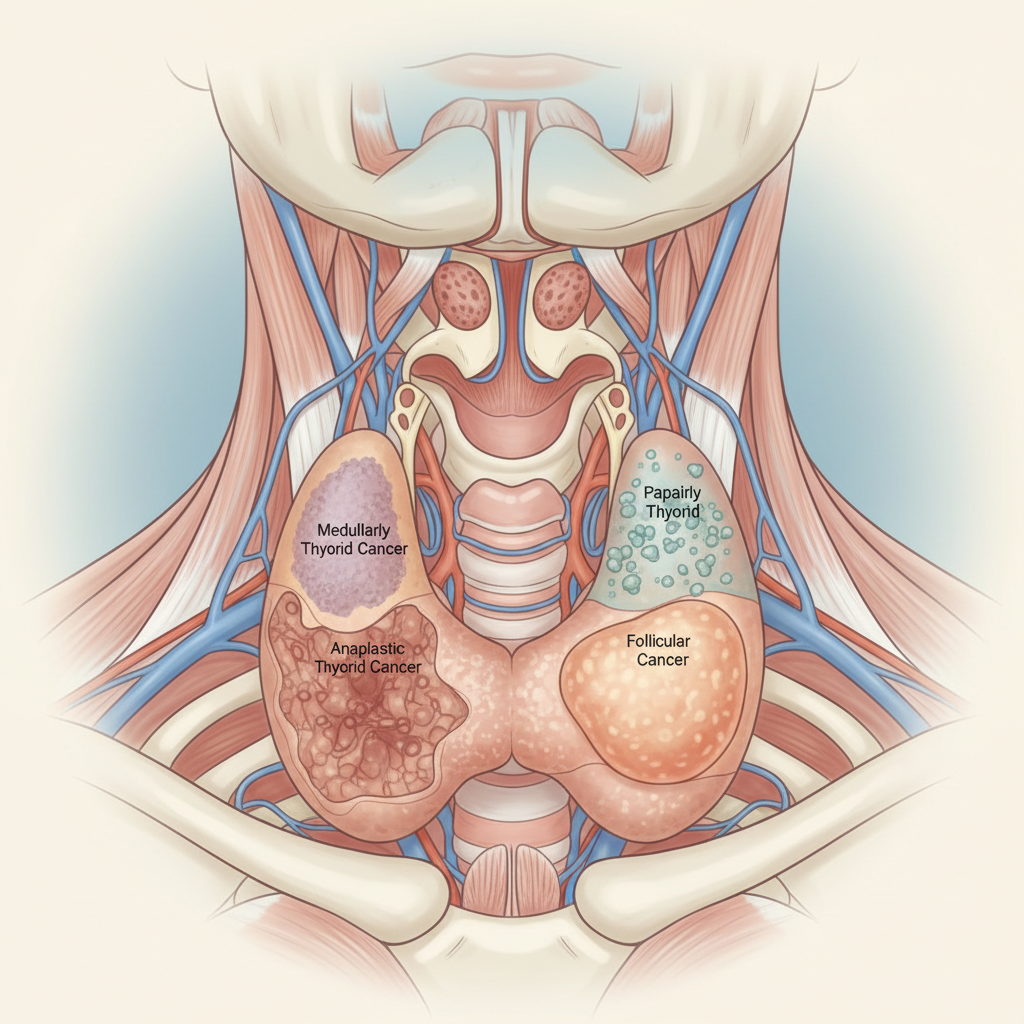
The prognosis for thyroid cancer heavily depends on its specific type. The vast majority of thyroid cancers fall into differentiated types, which tend to have excellent outcomes. However, a few rarer types are more aggressive.
Papillary Thyroid Cancer Survival Rate
Papillary thyroid cancer is the most common type, accounting for about 80% of all thyroid cancers. It typically grows slowly and often spreads to the lymph nodes in the neck, but it is highly curable [7]. The papillary thyroid cancer survival rate is exceptionally high. For localized papillary thyroid cancer, the 5-year relative survival rate is nearly 100%. Even when it has spread to regional lymph nodes, the 5-year survival rate remains very high, often above 99% [8]. Your loved one's care team in Orange County will guide you through the specifics of this common and treatable form.
Follicular Thyroid Cancer Outlook
Follicular thyroid cancer is the second most common type, making up about 10-15% of cases. It also often has a good prognosis, though it's slightly more likely to spread to distant parts of the body, such as the lungs or bones, compared to papillary cancer [7]. The follicular thyroid cancer outlook for localized disease is also excellent, with a 5-year relative survival rate near 100%. If it has spread regionally, the 5-year survival rate is typically above 97% [8]. These rates highlight why early detection and appropriate treatment are critical.
Medullary Thyroid Cancer Prognosis
Medullary thyroid cancer (MTC) is rarer, accounting for about 1-2% of cases. It originates from C cells in the thyroid, which produce calcitonin. MTC can sometimes be genetic (hereditary) and may require different treatment approaches and closer monitoring. The prognosis for MTC is generally not as favorable as for papillary and follicular types but is still considered good, especially if caught early. The 5-year survival rate for localized MTC is around 90%, dropping to about 80% for regional spread and 30% for distant spread [7].
Anaplastic Thyroid Cancer: A More Aggressive Form
Anaplastic thyroid cancer is very rare, representing less than 2% of all thyroid cancers, but it is one of the most aggressive and difficult to treat types. It grows rapidly and often spreads quickly. The prognosis for anaplastic thyroid cancer is unfortunately poor, with a 5-year survival rate typically below 10% [7]. Treatment for anaplastic thyroid cancer focuses on controlling the disease and improving quality of life. Clinical trials often play a significant role in exploring new treatment options for this aggressive cancer [1]. You can learn more about available trials by visiting our /clinical-trials page.
Factors Influencing Thyroid Cancer Prognosis
While the type of thyroid cancer is a major determinant, several other factors significantly influence an individual's thyroid cancer prognosis and survival rates.
Age and Stage at Diagnosis
One of the most important prognostic factors for differentiated thyroid cancer (papillary and follicular) is age at diagnosis [7]. Patients younger than 55 at diagnosis generally have a more favorable prognosis, even with some spread of the cancer [7]. The stage of the cancer also plays a critical role. Localized cancer (cancer confined to the thyroid) has a much better outlook than regionally advanced cancer (spread to nearby lymph nodes or tissues) or distant metastatic cancer (spread to other body parts) [9].
Tumor Characteristics and Genetic Mutations
The size of the tumor and whether it has spread outside the thyroid capsule are important indicators. Larger tumors or those that have invaded surrounding tissues tend to have a slightly less favorable prognosis. Additionally, certain genetic mutations found within the cancer cells can influence how aggressive the cancer is and how it responds to treatment. Your loved one's oncology team performs tests to identify these characteristics, helping to tailor the most effective treatment plan.
Response to Treatment
How well the cancer responds to initial treatments, such as surgery, radioactive iodine therapy, or targeted therapies, is a strong indicator of long-term prognosis. Patients who achieve a complete response (no evidence of disease after treatment) generally have an excellent outlook. Regular follow-up appointments and monitoring are crucial to detect any recurrence early and address it promptly [2].
Treatment Approaches and Their Impact
Modern thyroid cancer treatment is highly effective, contributing significantly to the excellent survival rates. Treatment plans are personalized based on the cancer type, stage, genetic markers, and the patient's overall health.
Surgery: The Primary Treatment
Surgery is typically the first and most important step in treating thyroid cancer. This usually involves a total thyroidectomy (removal of the entire thyroid gland) or a lobectomy (removal of half the thyroid). For most differentiated thyroid cancers, successful surgical removal can be curative. Experienced surgeons in Orange County are adept at performing these delicate procedures, aiming to remove all cancer while preserving surrounding structures [8].
Radioactive Iodine (RAI) Therapy
After surgery, many patients with papillary or follicular thyroid cancer receive radioactive iodine (RAI) therapy. This treatment uses a form of iodine absorbed only by thyroid cells (including cancerous ones), effectively destroying any remaining thyroid tissue or microscopic cancer cells that may have spread outside the gland. RAI therapy significantly reduces the risk of recurrence and improves long-term survival for appropriate candidates [4].
Targeted Therapy and Other Treatments
For more advanced or aggressive thyroid cancers, such as some cases of medullary or anaplastic thyroid cancer, or differentiated cancers that have spread and no longer respond to RAI, targeted therapies or chemotherapy may be used. Targeted drugs focus on specific genetic changes in cancer cells to inhibit their growth. External beam radiation therapy may also be considered in certain situations. Your care team will discuss all available options to achieve the best possible outcome.
Long-Term Effects of Thyroid Cancer Treatment Mission Viejo
Surviving thyroid cancer often means managing long-term effects, particularly relating to hormonal balance and quality of life. As a caregiver in Mission Viejo, understanding these can help you support your loved one comprehensively.
Lifelong Thyroid Hormone Replacement
After a total thyroidectomy, your loved one will need to take thyroid hormone replacement medication (levothyroxine) for the rest of their life. This medication replaces the hormones the thyroid gland would normally produce and also helps suppress the growth of any remaining thyroid cancer cells. Regular blood tests are needed to ensure the dosage is optimized [7]. Caregivers can assist by ensuring medication adherence and recognizing symptoms of under or over-medication.
Potential Side Effects and Monitoring
Side effects from treatment can include fatigue, changes in weight, voice changes, or calcium imbalances (especially after surgery). Radioactive iodine therapy can also cause temporary side effects such as dry mouth, changes in taste, and nausea. Your loved one’s care team will monitor for these effects and provide strategies for managing them. Long-term follow-up involves regular check-ups, blood tests (e.g., for TSH and thyroglobulin levels), and imaging scans to monitor for any recurrence [3].
Emotional and Psychological Support
Living with a cancer diagnosis and its aftermath can take an emotional toll. Many survivors experience anxiety, depression, or fear of recurrence. As a caregiver, encouraging open communication, joining support groups, or seeking professional counseling can be incredibly beneficial. Cancer Answers OC is here to connect you with local support resources, including the free Ask the Assistant chat (floating bottom-right button), which provides confidential, instant answers and can connect you with live OC specialists when needed.
Finding Local Support and Specialists in Mission Viejo
Navigating thyroid cancer care can be complex, but you don't have to do it alone. Access to local specialists and support networks in Orange County is invaluable.
Connecting with Specialized Care Teams
Choosing an experienced oncology team, including endocrinologists, surgeons, radiation oncologists, and nuclear medicine specialists, is crucial for optimal thyroid cancer prognosis. In Mission Viejo and across Orange County, highly skilled professionals offer comprehensive care tailored to thyroid cancer patients. Don't hesitate to seek a /second-opinion to ensure confidence in the treatment plan.
Support Groups and Resources for Caregivers
Local support groups for thyroid cancer patients and their caregivers can provide a safe space to share experiences, gain insights, and find emotional solace. Organizations like Cancer Answers OC offer resources to help you find these groups and connect with others who understand your journey. Remember, taking care of yourself as a caregiver is just as important as caring for your loved one.
Clinical Trials in the Orange County Area
For some patients, especially those with more complex or aggressive forms of thyroid cancer, participating in clinical trials in Orange County can offer access to cutting-edge treatments and contribute to advancing cancer research [6]. Your care team can help determine if a clinical trial is a suitable option. Visit our /clinical-trials page to learn more about studies currently underway.
Frequently asked questions
What is the prognosis for thyroid cancer overall?
Thyroid cancer generally has a very good prognosis, especially for the most common types (papillary and follicular). The 5-year survival rate for localized thyroid cancer is nearly 100%, and often above 98% for all stages combined [8].
How does papillary thyroid cancer survival rate compare to other types?
The papillary thyroid cancer survival rate is excellent, often near 100% for localized disease. This is among the highest survival rates of all cancer types and is better than medullary or anaplastic thyroid cancers [8, 10].
What is the follicular thyroid cancer outlook?
Like papillary thyroid cancer, the follicular thyroid cancer outlook is also very favorable, with 5-year survival rates close to 100% for localized disease, making it highly treatable [8, 10].
Does age impact thyroid cancer prognosis?
Yes, for differentiated thyroid cancers (papillary and follicular), being under 55 years old at diagnosis is considered a positive prognostic factor, often leading to a more favorable outlook even if some spread has occurred [7].
What are the long-term effects of thyroid cancer treatment?
Long-term effects often include the need for lifelong thyroid hormone replacement medication and ongoing monitoring for recurrence. Some patients may experience fatigue, weight changes, or voice changes. Emotional and psychological support is also important for many survivors [5].
Where can I find thyroid cancer specialists in Mission Viejo?
Cancer Answers OC can help you /find-specialist who are experts in thyroid cancer care in Mission Viejo and the greater Orange County area. We can connect you with compassionate and highly skilled teams.
When to call your care team
- New or worsening symptoms: Any unexplained changes or symptoms that concern you.
- Medication side effects: If your loved one experiences severe or persistent side effects from their medication.
- Emotional distress: If your loved one is struggling with anxiety, depression, or fear of recurrence.
- Changes in general health: Any significant decline in their overall well-being.
- Questions about follow-up care or test results: If you need clarification on appointments or diagnostic outcomes.
How Cancer Answers OC can help
At Cancer Answers OC, we understand the challenges caregivers face in Mission Viejo and throughout Orange County. We are dedicated to providing accurate, patient-friendly, and evidence-based information to empower you. Our website offers a wealth of resources, including a directory to help you /find-specialist in our local area and information on navigating the cancer journey.
Don't forget to utilize our free Ask the Assistant chat (the floating bottom-right button) for instant, private answers to your questions, 24/7. This AI-powered tool can provide immediate information and, if needed, connect you with live Orange County specialists. We are here to support you every step of the way, ensuring your loved one receives the best possible care with the highest chance of a positive thyroid cancer prognosis.
Sources
[1] Study Details | NCT01321554 | ClinicalTrials.gov - Clinical Trials URL: https://clinicaltrials.gov/study/NCT01321554
[2] Study Details | NCT00784303 | ClinicalTrials.gov - Clinical Trials URL: https://clinicaltrials.gov/study/NCT00784303
[3] Systematic Literature Review of the Prevalence and Prognostic ... URL: https://pmc.ncbi.nlm.nih.gov/articles/PMC10663197/
[4] Study Details | NCT01147250 | ClinicalTrials.gov - Clinical Trials URL: https://clinicaltrials.gov/study/NCT01147250
[5] Antioxidant supplements for prevention of mortality in healthy ... - PMC URL: https://pmc.ncbi.nlm.nih.gov/articles/PMC8407395/
[6] 2022 CGA-IGC Annual Meeting: The collaborative group of ... - PMC URL: https://pmc.ncbi.nlm.nih.gov/articles/PMC9870665/
[7] Thyroid Cancer Prognosis | Columbia Surgery URL: https://columbiasurgery.org/thyroid/staging-and-prognosis
[8] Thyroid Cancer Treatment & Survival Rate | City of Hope URL: https://www.cityofhope.org/clinical-program/thyroid-cancer/treatments-survival
[9] Thyroid Cancer: Survival Rates and Prognosis URL: https://resources.healthgrades.com/right-care/cancer/thyroid-cancer-survival-rates-and-prognosis
[10] Survival of thyroid cancer | Cancer Research UK URL: https://www.cancerresearchuk.org/about-cancer/thyroid-cancer/survival