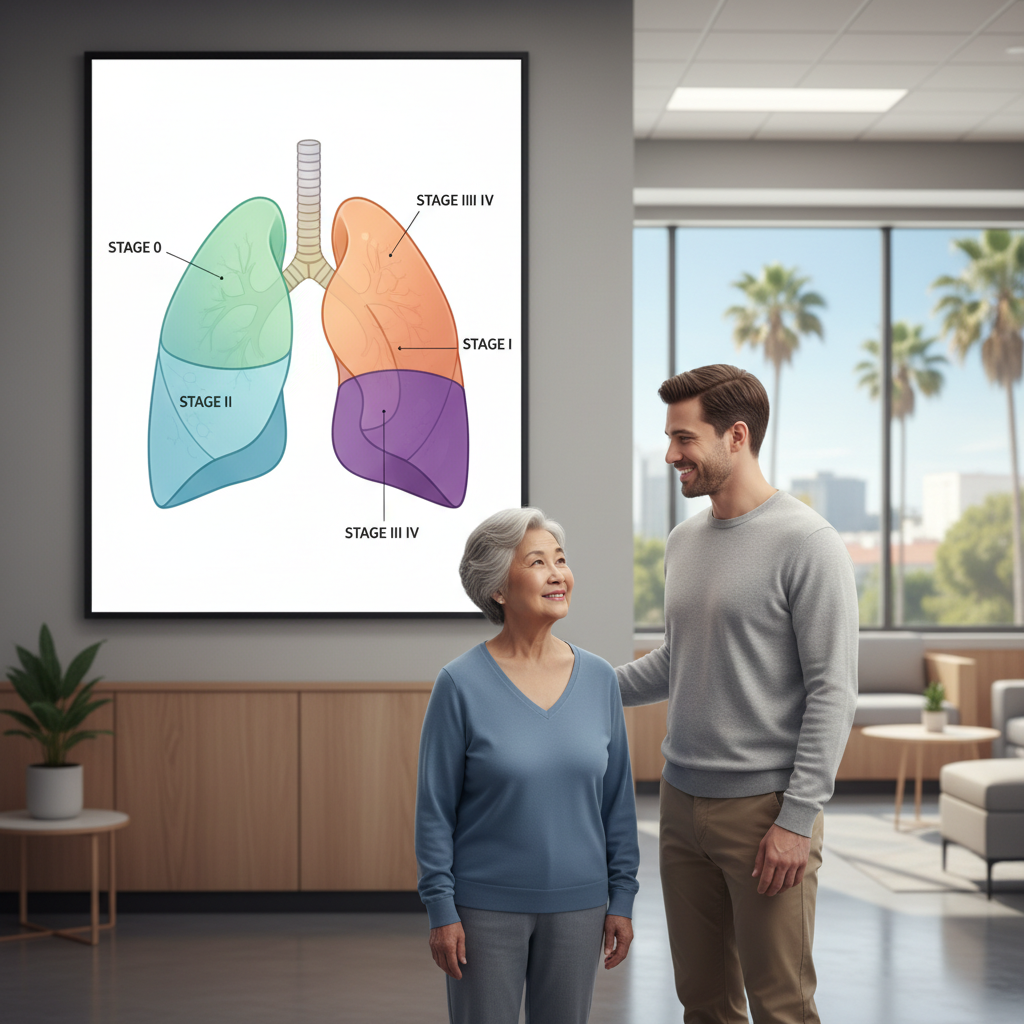
Receiving a lung cancer diagnosis can bring many questions, and understanding its stage is a crucial step for caregivers. This guide clarifies the staging systems for both non-small cell and small cell lung cancer, helping you navigate your loved one's journey with confidence.
Knowing the stage of lung cancer is essential because it guides treatment decisions and provides insight into prognosis. For those in Santa Ana, understanding these details can help you ask informed questions and support your loved one effectively throughout their care.
At a glance
| Detail | Summary |
|---|---|
| Topic | understanding different stages of lung cancer Santa Ana |
| Who it is for | Caregivers and family |
| Area served | Orange County, California |
| Category | patient-education |
| Reading time | About 15 minutes |
| Cited sources | 6 |
| Last reviewed | 2026-06-01 |
Key takeaways
- Lung cancer staging describes the size and spread of the cancer.
- The TNM system is primarily used for non-small cell lung cancer (NSCLC) and assesses the tumor, lymph nodes, and metastasis [1].
- Small cell lung cancer (SCLC) is typically staged using a simpler limited vs. extensive disease system.
- Understanding the stage helps doctors in Santa Ana determine the most effective treatment plan and provides an outlook on the cancer's progression.
- Caregivers play a vital role in understanding this information to support their loved one's journey.
The Importance of Lung Cancer Staging for Caregivers
When a loved one receives a lung cancer diagnosis, your world can feel turned upside down. As a caregiver, you're not just offering emotional support; you're also taking an active role in understanding medical information and making informed decisions alongside them.
Why Staging Matters
Staging is essentially a detailed description of the cancer: where it is, how big it is, and whether it has spread. This information is critical for the medical team as they develop a personalized treatment plan [10]. For caregivers, it's the foundation for understanding what to expect and how to best advocate for your loved one. It also provides a framework for discussing the potential outcomes and trajectories of the disease, often referred to as prognosis.
Empowering Your Role
Understanding your loved one's lung cancer stage empowers you to ask targeted questions during appointments and to interpret the information provided by doctors. It helps you prepare for the types of treatments that may be recommended and allows you to adjust your support strategies as needed. Our team of specialists in Santa Ana is here to guide you through every step, ensuring you have the knowledge you need.
Types of Lung Cancer and Their Staging Systems
Lung cancer isn't just one disease; it includes different types, primarily grouped into non-small cell lung cancer (NSCLC) and small cell lung cancer (SCLC). Each type has its own characteristics and, consequently, its own staging system.
Non-Small Cell Lung Cancer (NSCLC) Staging
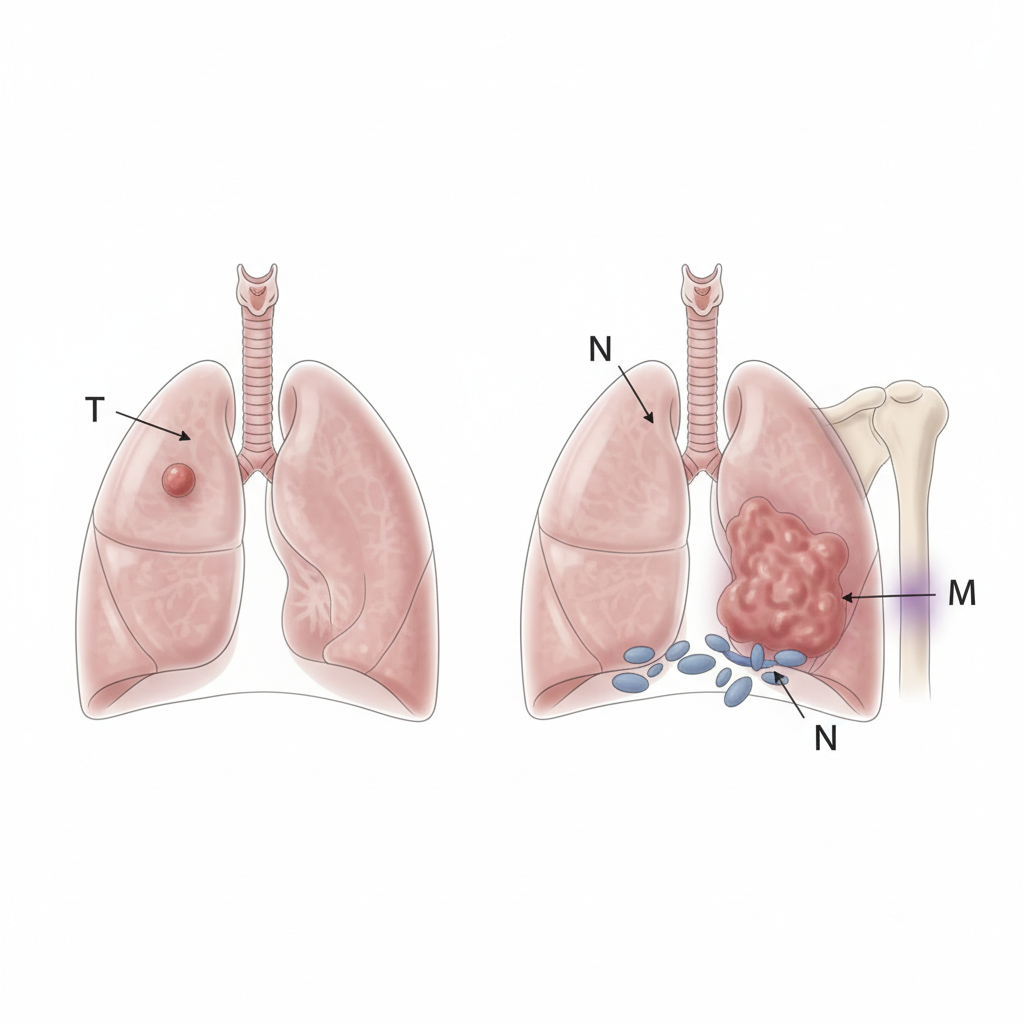
NSCLC accounts for about 85% of all lung cancers [6]. Its staging is complex and uses the internationally recognized TNM system, which considers three key factors [1]:
- T (Tumor): Describes the size of the primary tumor and whether it has grown into nearby structures.
- N (Nodes): Indicates whether cancer cells have spread to nearby lymph nodes.
- M (Metastasis): Shows if the cancer has spread to distant parts of the body (metastasized).
These T, N, and M values are combined to assign an overall stage from 0 to IV, with substages (e.g., IA, IB) to provide even greater precision. The higher the stage number, the more advanced the cancer [3].
Small Cell Lung Cancer (SCLC) Staging
SCLC is less common but tends to grow and spread more quickly than NSCLC [8]. Due to its aggressive nature, SCLC is usually classified using a simpler system with two main stages:
- Limited Stage: The cancer is confined to one side of the chest and can be treated with a single radiation field. This typically includes the original tumor, nearby lymph nodes, and the area between the lungs [9].
- Extensive Stage: The cancer has spread beyond one side of the chest, to other parts of the lung, or to distant organs [9].
This simplified division helps guide immediate treatment planning, which often involves systemic therapies like chemotherapy, due to SCLC's rapid spread.
In-depth look
Understanding the specifics of how tumors are classified, the role of lymph nodes, and what metastasis means can help you grasp the full picture of your loved one's diagnosis.
The TNM System Explained for NSCLC
The TNM system is a nuanced tool that offers a comprehensive view of NSCLC progression. Each letter is further subdivided:
- T (Tumor Size and Location): This ranges from T0 (no evidence of primary tumor) to T4 (very large tumor or one that has grown into critical structures like the heart or trachea). Factors like tumor size, its invasion into major airways, and additional tumor nodules in the same lung are all considered [5].
- N (Regional Lymph Node Involvement): N0 means no cancer in nearby lymph nodes. N1 means cancer in lymph nodes on the same side of the body as the primary tumor. N2 indicates involvement of lymph nodes further away but still within the chest on the same side. N3 signifies spread to lymph nodes on the opposite side of the chest or in the neck/collarbone area [2].
- M (Distant Metastasis): M0 means no distant spread. M1 indicates metastasis to distant organs like the brain, bones, liver, or adrenal glands. This is a critical factor, as M1 always signifies stage IV cancer [4].
Translating TNM into Stages (NSCLC)
These T, N, and M values are combined to assign an overall stage group. Here’s a simplified breakdown:
- Stage 0: Cancer cells are found only in the innermost lining of the lung's airways and haven't invaded deeper tissues (called carcinoma in situ).
- Stage I: The cancer is small, localized, and has not spread to lymph nodes or distant sites.
- Stage II: The cancer is larger, or it has spread to nearby lymph nodes on the same side of the chest, but it's still contained within the chest.
- Stage III: The cancer is larger and has spread to lymph nodes in the center of the chest or to nearby structures. This stage is further divided into IIIA, IIIB, and IIIC based on the extent of lymph node involvement and tumor size/location.
- Stage IV: The cancer has spread to distant parts of the body, such as other organs or the other lung. This is generally the most advanced stage.
This detailed staging allows a precise evaluation of the disease, which is crucial for tailoring treatment strategies for patients in Santa Ana.
Diagnosis and Testing for Staging
Accurate staging of lung cancer requires a series of diagnostic tests. These tests help the medical team determine the precise extent of the disease, ensuring that your loved one receives the most appropriate treatment plan.
Imaging Tests
Imaging plays a pivotal role in staging. Your care team might recommend several types:
- CT Scans: These detailed X-rays provide cross-sectional images of the lungs, lymph nodes, and surrounding areas, helping to measure tumor size and detect spread [10].
- PET Scans (Positron Emission Tomography): Often combined with CT, PET scans use a radioactive sugar to highlight areas of increased metabolic activity, which can indicate cancer cells. This helps identify primary tumors, affected lymph nodes, and distant metastases [2].
- MRI (Magnetic Resonance Imaging): MRIs are particularly useful for detecting if cancer has spread to the brain or spinal cord.
- Bone Scans: These can detect if cancer has spread to the bones, which is a common site for lung cancer metastasis.
Biopsies and Pathology
While imaging gives a visual map, biopsies provide the definitive diagnosis and are crucial for staging. A biopsy involves removing a small tissue sample for examination under a microscope. Different methods can be used:
- Bronchoscopy: A thin, flexible tube with a camera is passed down the throat into the lungs to collect tissue or fluid samples.
- Needle Biopsy: A needle is guided through the skin (often with CT guidance) to extract tissue from the lung or suspicious lymph nodes.
- Surgical Biopsy: In some cases, a small surgical procedure may be necessary to obtain a larger tissue sample or to remove lymph nodes for evaluation.
Pathologists then examine these samples to confirm the presence of cancer, determine its type (NSCLC or SCLC), and look for specific genetic markers that can guide targeted therapies. For assistance understanding these complex reports, consider using our free Ask the Assistant chat, available 24/7, for instant answers and connections to local specialists.
Treatment Approaches Based on Stage
The stage of lung cancer significantly influences the recommended course of treatment. The goal is always to provide the most effective care while minimizing side effects, and this approach is highly individualized for each patient in Santa Ana.
Early-Stage Lung Cancer (Stages I and II NSCLC, Limited Stage SCLC)
For early-stage NSCLC, when the cancer is localized, the primary treatment is often surgery to remove the tumor and possibly surrounding lymph nodes. Radiation therapy, especially stereotactic body radiation therapy (SBRT), may be an option for those who cannot undergo surgery [7]. Adjuvant chemotherapy or targeted therapy might be given after surgery to reduce the risk of recurrence.
For limited stage SCLC, treatment typically involves a combination of chemotherapy and radiation therapy, often given concurrently, to target the cancer in the chest [9].
Advanced-Stage Lung Cancer (Stages III and IV NSCLC, Extensive Stage SCLC)
Advanced NSCLC (Stage III and IV) and extensive stage SCLC require a more complex and often multi-modality approach. Treatment may include:
- Chemotherapy: Medications that kill cancer cells throughout the body.
- Radiation Therapy: High-energy rays used to kill cancer cells or shrink tumors.
- Targeted Therapy: Drugs that attack specific vulnerabilities in cancer cells, often determined by genetic testing of the tumor.
- Immunotherapy: Medications that help the body's immune system recognize and fight cancer cells.
For Stage III NSCLC, a combination of chemotherapy, radiation, and sometimes surgery or immunotherapy is often used. For Stage IV NSCLC and extensive stage SCLC, the focus is typically on systemic therapies (chemotherapy, targeted therapy, immunotherapy) to control the disease and manage symptoms. Clinical trials offering innovative new treatments may also be an option at various stages; you can explore these options at /clinical-trials.
Prognosis and Outlook by Stage in Santa Ana
Caregivers often want to understand the prognosis – the likely course and outcome of the disease. While no two cancer journeys are exactly alike, lung cancer prognosis by stage provides a general idea of what to expect, based on broad statistical data [10]. It's important to remember that these are statistics, and individual experiences can vary widely due to many factors.
General Prognosis for NSCLC by Stage
Survival rates are often discussed in terms of the five-year survival rate, which is the percentage of people who are still alive five years after diagnosis. These rates are significantly influenced by the stage of the cancer at diagnosis:
- Stage I: The five-year survival rate for localized NSCLC, where the cancer has not spread, can be quite high, sometimes over 50-60%. Early diagnosis offers the best chances for successful treatment.
- Stage II: As the cancer involves nearby lymph nodes, the five-year survival rate typically falls into the 30-40% range.
- Stage III: With more extensive lymph node involvement or spread to adjacent structures, the five-year survival rate for Stage III NSCLC varies widely but can range from 10-30% depending on the specific substage.
- Stage IV: Once the cancer has metastasized to distant organs, the five-year survival rate is generally lower, often in the single digits or low teens, though new treatments like targeted therapies and immunotherapy are improving these numbers for many.
General Prognosis for SCLC by Stage
Due to its aggressive nature, SCLC generally has a less favorable prognosis than NSCLC. However, treatment advances continue to improve outcomes for many patients:
- Limited Stage SCLC: The five-year survival rate is typically in the 15-20% range. Early detection and aggressive treatment are crucial.
- Extensive Stage SCLC: For extensive stage SCLC, where the cancer has spread widely, the five-year survival rate is generally much lower, often around 2-3%. Managing symptoms and improving quality of life are key treatment goals.
Remember, these statistics represent averages. Your loved one’s specific outlook depends on many individual factors, including their overall health, the exact characteristics of their cancer, and their response to treatment. Discussing specific prognosis with your loved one's medical team in Santa Ana is always the most reliable source of information. You might also consider seeking a /second-opinion to gain additional perspectives on their diagnosis and potential treatment paths.
Challenges and Support for Caregivers in Santa Ana
Caring for someone with lung cancer, especially when navigating complex staging information, can be incredibly demanding. It's vital to acknowledge these challenges and seek out appropriate support systems, both for your loved one and for yourself.
Navigating the Emotional Toll
As a caregiver, you may experience a range of emotions, from fear and anxiety to exhaustion and helplessness. It's okay to feel overwhelmed. Finding healthy ways to process these emotions is crucial. Talking to a trusted friend, family member, or a support group can provide much-needed relief. Remember, your well-being directly impacts your ability to provide care.
Practical Support and Resources
Beyond emotional support, practical assistance is often essential. This might include help with transportation to appointments, meal preparation, or managing daily tasks. Don't hesitate to ask for help from friends, family, or community organizations. For local support in Santa Ana, consider reaching out to cancer support groups or patient advocacy organizations that can offer resources and connections.
Cancer Answers OC is dedicated to supporting caregivers and patients in Orange County. We understand the unique challenges faced by those undergoing treatment in areas like Santa Ana. Our resources are designed to help you navigate this journey with confidence, providing access to specialists and up-to-date information. If you need immediate assistance or have questions, our free Ask the Assistant chat is available 24/7 with instant answers, and can connect you with live OC specialists when needed.
Frequently asked questions
### What is the difference between clinical staging and pathological staging?
Clinical staging uses results from imaging tests (like CT, PET, MRI) and biopsies to estimate the cancer's stage before surgery [2, 10]. Pathological staging, on the other hand, is determined after surgery, based on a detailed examination of the removed tumor and lymph nodes, providing the most accurate information available [5]. Sometimes, clinical and pathological stages may differ slightly.
### How often is lung cancer restaged?
Lung cancer may be restaged if the disease progresses, if new areas of cancer are found, or sometimes after initial treatment to assess its effectiveness. This helps to guide subsequent treatment decisions.
### Does early diagnosis improve lung cancer prognosis?
Yes, absolutely. Detecting lung cancer at an earlier stage (Stage I or II) generally leads to significantly better prognosis and higher survival rates because treatment options, such as surgery, are often more effective at removing localized cancer [4]. Regular screenings for high-risk individuals can lead to earlier diagnosis.
### What is a mediastinal lymph node, and why is its involvement important for staging?
Meditastinal lymph nodes are located in the central part of the chest, between the lungs. If cancer has spread to these lymph nodes, it indicates a more advanced stage (typically Stage IIIA or higher for NSCLC), as it suggests the cancer has moved beyond the immediate vicinity of the primary tumor [2].
### My loved one was diagnosed with limited stage SCLC. What does that mean?
Limited stage SCLC means the cancer is confined to one lung and possibly nearby lymph nodes, all within an area that can be treated with a single radiation field [9]. While aggressive, this stage offers a better prognosis than extensive stage SCLC and is often treated with a combination of chemotherapy and radiation.
### How can I best support my loved one during their staging process?
You can best support them by attending appointments, taking notes, asking clarifying questions, and helping them understand the information. Encourage them to voice their concerns and preferences. Providing emotional support, managing practical aspects, and advocating for their care are also crucial roles. Explore resources at /contact for more personalized guidance.
When to call your care team
- Any new or worsening symptoms your loved one experiences.
- Unexplained new pain, fever, or significant weight loss.
- Concerns about side effects from diagnostic tests or treatments.
- If your loved one is experiencing significant emotional distress.
- Questions or confusion about staging results or treatment plans.
How Cancer Answers OC can help
At Cancer Answers OC, we're committed to providing compassionate, expert support to lung cancer patients and their caregivers in Santa Ana and throughout Orange County. We understand that navigating a cancer diagnosis can be overwhelming, and we're here to simplify the journey.
Our network includes top oncologists and specialists, ensuring you have access to the best care. We can assist you in finding a local specialist in Santa Ana, obtaining important medical information, and connecting you with clinical trials that offer advanced treatment options. Use our free Ask the Assistant chat (floating bottom-right button) anytime for instant, private answers to your questions, or to connect with live OC specialists for personalized guidance and support.
Related resources
- Don’t Ignore the Whisper: Recognizing the Signs and Symptoms of Ovarian Cancer
- Understanding Melanoma Symptoms: Early Detection is Key
- Early Detection of Thyroid Cancer Symptoms in Anaheim: A Caregiver's Guide
- Find a cancer specialist in Orange County
- Get a second opinion
- Insurance and coverage guide
Sources
- Clinical TNM Lung Cancer Staging: A Diagnostic Algorithm ... - PMC URL: https://pmc.ncbi.nlm.nih.gov/articles/PMC11988785/
- Lung Cancer Staging: Clinical and Radiologic Perspectives - PMC URL: https://pmc.ncbi.nlm.nih.gov/articles/PMC3709937/
- The TNM classification of lung cancer—a historic perspective - PMC URL: https://pmc.ncbi.nlm.nih.gov/articles/PMC11635265/
- Timeliness of Care and Lung Cancer Tumor-Stage Progression - PMC URL: https://pmc.ncbi.nlm.nih.gov/articles/PMC5813822/
- Pathologic assessment and staging of multiple non-small cell lung ... URL: https://pmc.ncbi.nlm.nih.gov/articles/PMC11102290/
- Lung Cancer—Epidemiology, Pathogenesis, Treatment and ... - PMC URL: https://pmc.ncbi.nlm.nih.gov/articles/PMC11900952/
- Navigating Lung Cancer: Understanding Stages 1–3 - YouTube URL: https://www.youtube.com/watch?v=opuEwoR1Xmk
- Lung Cancer Types, Stages 1 to 4, How It's Diagnosed, and Genetic ... URL: https://www.mskcc.org/cancer-conditions/lung-cancer/diagnosis-types-stages
- SLCVL - Santana-Davila #1 Basics of Lung Cancer Staging - YouTube URL: https://www.youtube.com/watch?v=td08wC8xIzE
- Lung Cancer Staging | American Lung Association URL: https://www.lung.org/lung-health-diseases/lung-disease-lookup/lung-cancer/symptoms-diagnosis/lung-cancer-staging