
Navigating a prostate cancer diagnosis can feel overwhelming, but understanding your treatment options is a crucial first step. In Orange County, patients have access to a wide range of advanced therapies and specialized care designed to fit their unique needs and cancer stage.
This guide will explore the various prostate cancer treatment options available, from traditional approaches like surgery and radiation to innovative new therapies. We'll help you understand what to expect, how to choose the right path, and where to find the best prostate cancer doctors and clinics in Orange County, including specialized care in Irvine and Fullerton.
Key takeaways
- Personalized Treatment Plans are Key: Prostate cancer treatment is highly individualized, considering your cancer's aggressiveness, your health, and your preferences.
- Comprehensive Options Available: Orange County offers a full spectrum of treatments, including surgery, radiation, hormone therapy, and cutting-edge immunotherapies.
- Active Surveillance is a Valid Choice: For many men with low-risk prostate cancer, closely monitoring the cancer without immediate aggressive treatment is a safe and effective option.
- Access to Clinical Trials: Innovative new prostate cancer therapies, like those using dendritic cells, are often available through local clinical trials in areas like Irvine and Fullerton [2], [1].
- Multidisciplinary Care is Crucial: The best outcomes often come from a team approach involving urologists, oncologists, radiation oncologists, and other specialists, often found in comprehensive cancer centers like those in Orange County [7].
Understanding Your Prostate Cancer Diagnosis
A prostate cancer diagnosis can bring many questions and concerns. Taking the time to understand your specific situation is the first step toward making informed treatment decisions. This involves looking closely at several factors that characterize your cancer.
Gleason Score and Grade Group
When your biopsy tissue is examined, pathologists assign a Gleason score, which reflects how aggressive the cancer cells appear under a microscope. This score ranges from 6 to 10, with higher numbers indicating more aggressive cancer. Based on the Gleason score, your cancer is also assigned a Grade Group (1-5), which simplifies understanding the cancer's aggressiveness. For instance, a Gleason score of 6 corresponds to Grade Group 1, typically representing less aggressive cancer [8].
PSA Levels and Staging
Your Prostate-Specific Antigen (PSA) level is a blood test that can indicate the presence of prostate cancer or its activity. Combined with the Gleason score and imaging results, doctors determine the cancer's stage. Staging describes whether the cancer is confined to the prostate, has spread to nearby tissues, or has metastasized to distant parts of the body. This information is critical for tailoring the most effective prostate cancer treatment options.
Traditional Prostate Cancer Treatment Options
For many men, established treatments offer excellent outcomes. These traditional approaches are often the first line of defense, especially for localized prostate cancer.
Surgery: Radical Prostatectomy
Radical prostatectomy involves the surgical removal of the entire prostate gland and sometimes surrounding lymph nodes. This procedure is a common option for localized prostate cancer, particularly for younger, healthier men. Advances in surgical techniques, such as robotic-assisted laparoscopic prostatectomy, have led to less invasive procedures, potentially reducing recovery time and side effects. Many expert surgeons in Orange County, including those in Irvine, specialize in these advanced techniques [8].
Radiation Therapy: External Beam and Brachytherapy
Radiation therapy uses high-energy rays to kill cancer cells. External beam radiation therapy (EBRT) delivers radiation from a machine outside the body, precisely targeting the prostate. Brachytherapy, a form of internal radiation, involves placing small radioactive seeds directly into the prostate gland. Both options can be highly effective, and the choice often depends on the cancer's characteristics and patient preferences. Local clinics in Fullerton and across Orange County provide state-of-the-art radiation oncology services.
Hormone Therapy and Chemotherapy
When prostate cancer is more advanced or has spread beyond the prostate, systemic treatments like hormone therapy and chemotherapy become crucial. These therapies work throughout the body to target cancer cells.
Hormone Therapy (Androgen Deprivation Therapy)
Prostate cancer often relies on male hormones, called androgens (like testosterone), to grow. Hormone therapy, also known as Androgen Deprivation Therapy (ADT), works by reducing the levels of these hormones or blocking their effects. This can slow or stop cancer growth and shrink tumors. Several types of hormone therapy exist, including LHRH agonists, LHRH antagonists, and anti-androgens like apalutamide, which was approved by the FDA for certain men with non-metastatic prostate cancer [3]. Some forms of advanced prostate cancer can become castration-resistant, meaning they continue to grow despite low testosterone levels [5].
Chemotherapy
Chemotherapy uses powerful drugs to kill rapidly dividing cells, including cancer cells. It is typically reserved for more advanced prostate cancer, especially when hormone therapy is no longer effective. Chemotherapy drugs can be given intravenously or orally and are often administered in cycles. Your oncologist will discuss the potential benefits and side effects, and leading cancer centers in Orange County offer comprehensive chemotherapy services.
Active Surveillance: A Thoughtful Approach
Not all prostate cancers require immediate aggressive treatment. For many men, active surveillance offers a way to monitor the cancer closely without undergoing immediate surgery or radiation.
Who is a Candidate for Active Surveillance?
Active surveillance is typically recommended for men with low-risk, early-stage prostate cancer that is unlikely to cause problems for many years [8]. This usually means a low Gleason score (Grade Group 1), low PSA levels, and cancer confined to a small area of the prostate. It's a choice made after careful discussion with your doctor, weighing the potential benefits of avoiding treatment side effects against the need for regular monitoring.
Monitoring and Decision Points
If you choose active surveillance, you will undergo regular PSA tests, digital rectal exams, and periodic biopsies to monitor the cancer's progression. Should the cancer show signs of becoming more aggressive, or if your preferences change, you and your care team can then decide to move forward with active treatment. This approach allows you to delay or potentially avoid invasive treatments while still ensuring the cancer is properly managed.
Cutting-Edge and New Prostate Cancer Therapies
The field of prostate cancer treatment is rapidly evolving, with new therapies constantly emerging. Orange County patients have access to some of the most innovative treatments, often through participation in clinical trials.
Targeted Therapy and Immunotherapy
Targeted therapy drugs focus on specific characteristics of cancer cells, such as certain genes or proteins, to block their growth and spread while minimizing harm to healthy cells. Immunotherapy, on the other hand, harnesses the body's own immune system to recognize and destroy cancer cells [6]. For example, studies are exploring the efficacy of using dendritic cells to stimulate an immune response against prostate cancer [2]. These therapies represent a promising frontier for many advanced prostate cancer patients.
Clinical Trials for Advanced Prostate Cancer
Participation in clinical trials offers access to investigative treatments that are not yet widely available. For instance, specific studies in Orange County are evaluating novel agents for metastatic castration-resistant prostate cancer [1]. If traditional treatments are no longer effective, or if you are looking for advanced options, discussing clinical trials with your care team could be an important step. You can explore available trials at /clinical-trials or ask your local cancer treatment clinics about options in Irvine or Fullerton.
In-depth look
Choosing the right prostate cancer treatment option can feel like navigating a complex maze. It’s a highly personal decision influenced by medical factors, your lifestyle, and your values. Your care team will guide you through this process, explaining each option's potential benefits and risks. They will consider your specific cancer grade and stage, your age, overall health, and personal preferences regarding quality of life and potential side effects.
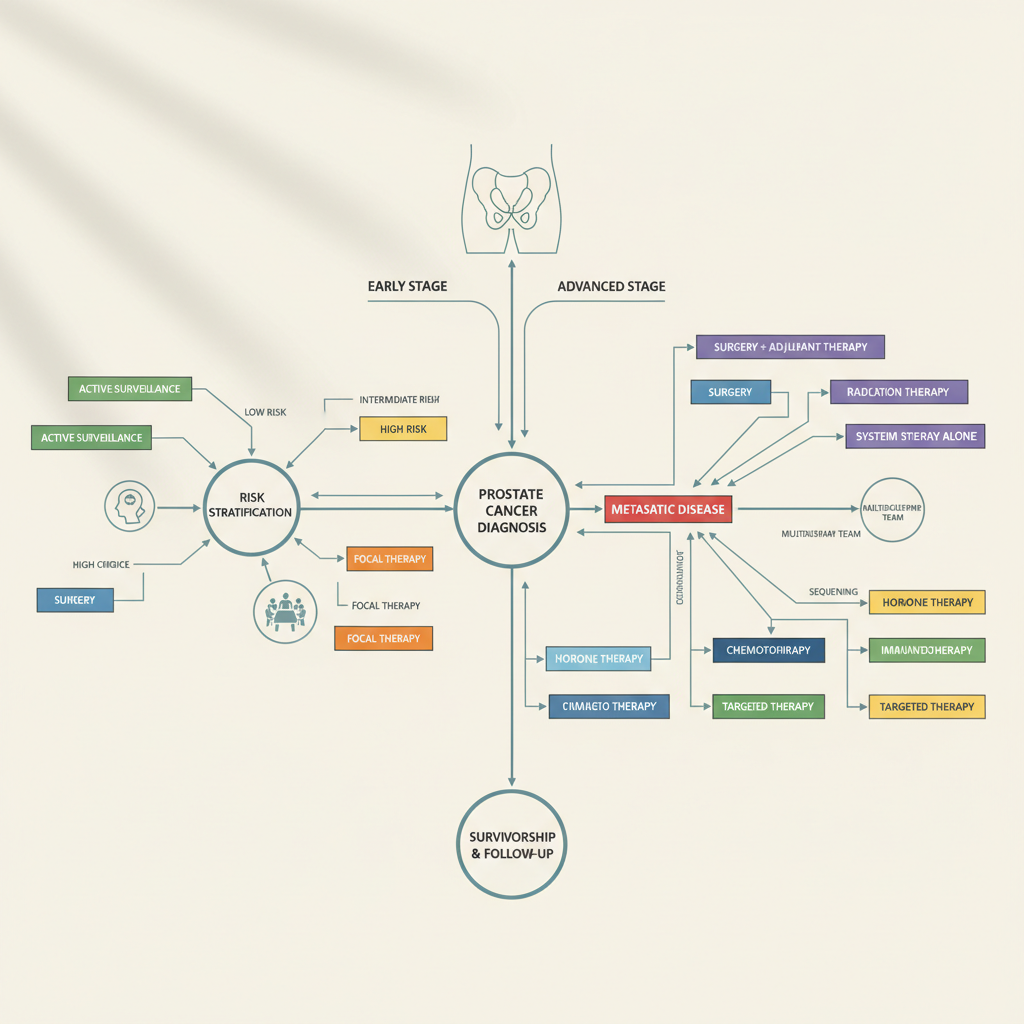
For example, a younger, healthier man with aggressive, localized cancer might lean towards surgery with the goal of complete removal. An older man with slow-growing cancer and other health issues might prefer active surveillance or radiation to minimize invasive procedures. It’s about finding the balance that's best for you. Don't hesitate to seek a /second-opinion to ensure you feel confident in your chosen path.
Multidisciplinary Care in Orange County
Many of the best prostate cancer doctors and cancer treatment clinics in Orange County, particularly in areas like Irvine, utilize a multidisciplinary approach. This means a team of specialists collaborates to provide comprehensive care.
The Care Team Approach
Your multidisciplinary care team may include urologists, medical oncologists, radiation oncologists, pathologists, radiologists, nurses, and patient navigators. This collaborative model ensures that all aspects of your cancer are considered, leading to a more integrated and personalized treatment plan. City of Hope Orange County, for instance, emphasizes such comprehensive, team-based care [7].
Finding Specialized Prostate Cancer Care Near You
Orange County is home to several leading institutions and specialists in prostate cancer care. Whether you are looking for advanced surgical expertise in Irvine or innovative radiation therapies in Fullerton, resources are available. Organizations like the Prostate Cancer Research Institute (PCRI) also serve as valuable resources for patients seeking to understand their options and connect with expert physicians [9]. To find a specialist close to you, refer to our /find-specialist page, or start a free, private chat with our Ask the Assistant tool (floating bottom-right button) to get instant help connecting with local experts.
Frequently asked questions
What are the main types of prostate cancer treatment?
The main types include active surveillance, surgery (radical prostatectomy), radiation therapy (external beam or brachytherapy), hormone therapy, chemotherapy, and newer approaches like targeted therapy and immunotherapy. The best choice depends on your specific cancer details and personal health [8].
Is active surveillance a safe option for prostate cancer?
Yes, for many men with low-risk, early-stage prostate cancer, active surveillance is a very safe and effective option. It involves regular monitoring to ensure the cancer isn't progressing, allowing you to delay or avoid more aggressive treatments and their potential side effects [8].
How do I choose between surgery and radiation for prostate cancer?
Choosing between surgery and radiation involves weighing factors like your age, overall health, cancer characteristics, and your preferences regarding potential side effects like urinary, bowel, and sexual function. Your care team will discuss these in detail to help you make an informed decision.
Are there new treatments for advanced prostate cancer available in Orange County?
Yes, Orange County residents often have access to cutting-edge treatments through clinical trials and specialized cancer centers. These can include novel targeted therapies, immunotherapies, and investigational drugs for metastatic or castration-resistant prostate cancer [1].
Where can I find the best prostate cancer doctors in Irvine or Fullerton?
Many highly-rated urologists and oncologists specializing in prostate cancer practice in Irvine, Fullerton, and throughout Orange County. Consider consulting recognized cancer centers, academic medical institutions, or using our /find-specialist tool to locate top experts near you.
What support is available for prostate cancer patients and their families?
Beyond medical treatment, support groups, patient navigators, and educational resources are available from organizations like Cancer Answers OC and local community groups. These resources can help you cope with the emotional and practical aspects of a prostate cancer diagnosis.
When to call your care team
- New or worsening side effects from treatment (e.g., severe fatigue, pain, nausea).
- Signs of infection (fever, chills).
- Significant changes in urinary or bowel habits.
- Unexplained weight loss or loss of appetite.
- Any new or concerning symptoms, especially if they are sudden or severe.
- Feeling overwhelmed, anxious, or depressed about your diagnosis or treatment.
How Cancer Answers OC can help
At Cancer Answers OC, we understand that facing prostate cancer can be daunting. Our mission is to empower patients in Orange County with clear, reliable, and compassionate information about prostate cancer treatment options. We connect you with top-tier specialists, provide access to educational resources, and help you navigate the complexities of your care journey.
We offer personalized guidance and support to help you make informed decisions about your treatment path. Explore our website for more information, use our /find-specialist tool to locate expert care, or consider engaging in a clinical trial through /clinical-trials. For immediate, confidential assistance and answers to your questions, try our free Ask the Assistant chat (floating button on the bottom-right of your screen) — it's available 24/7 and can connect you to live Orange County specialists when needed.
Related resources
- Second Opinion for Colorectal Cancer in Mission Viejo: Your Guide to Confident Care
- Finding Ovarian Cancer Specialists in Irvine, California: A Comprehensive Guide
- Finding the Best Breast Cancer Treatment in Newport Beach
- Find a cancer specialist in Orange County
- Get a second opinion
- Insurance and coverage guide
Sources
- ClinicalTrials.gov. (n.d.). Study Details | NCT03678025 | ClinicalTrials.gov - Clinical Trials. Retrieved from https://clinicaltrials.gov/study/NCT03678025
- Efficacy of Using Dendritic Cells in the Treatment of Prostate Cancer. (n.d.). Retrieved from https://pmc.ncbi.nlm.nih.gov/articles/PMC12112211/
- National Cancer Institute. (2018, March 8). FDA Approves Apalutamide for Some Men with Prostate Cancer. Retrieved from https://www.cancer.gov/news-events/cancer-currents-blog/2018/apalutamide-fda-nonmetastatic-prostate
- Evolving Treatments and Resistance Mechanisms in Prostate ... - PMC. (n.d.). Retrieved from https://pmc.ncbi.nlm.nih.gov/articles/PMC13077499/
- PubMed. (n.d.). Wnt signaling in castration-resistant prostate cancer. Retrieved from https://pubmed.ncbi.nlm.nih.gov/25143959/
- PMC. (n.d.). Prostate cancer immunotherapy: a review of recent advancements .... Retrieved from https://pmc.ncbi.nlm.nih.gov/articles/PMC9428569/
- City of Hope. (n.d.). Prostate Cancer Care in Orange County | City of Hope. Retrieved from https://www.cityofhope.org/orange-county/cancer-programs/prostate-cancer-care-orange-county
- Prostate Forum of Orange County. (n.d.). Treatment Options (List). Retrieved from https://www.prostateforum.org/treatment-options-1
- Prostate Cancer Research Institute. (n.d.). Prostate Cancer Treatment Options. Retrieved from https://pcri.org/about-us