
Navigating a prostate cancer diagnosis can feel overwhelming, but exploring clinical trials offers a path to innovative treatments and hope. These studies, often available right here in Tustin and Orange County, contribute to advancing cancer care while potentially offering patients cutting-edge therapies before they are widely accessible.
For many patients, participation also means access to multidisciplinary care teams and close monitoring, providing an additional layer of support throughout their treatment journey. Understanding how to find and qualify for these trials is a crucial first step in considering all available options.
Key takeaways
- Clinical trials offer access to cutting-edge treatments: Patients may receive new therapies unavailable elsewhere.
- Eligibility varies widely: Factors like cancer stage, prior treatments, and overall health determine participation.
- Orange County has active research centers: Facilities like UCI are key sites for prostate cancer studies.
- Participation is a personal decision: Discuss options thoroughly with your care team and loved ones.
- Resources are available: Use tools like ClinicalTrials.gov and local cancer centers to find studies.
Understanding Clinical Trials for Prostate Cancer
When faced with a prostate cancer diagnosis, patients and their families often seek every possible option. Clinical trials are at the forefront of medical innovation, offering access to therapies and diagnostic tools that are not yet widely available. For those in Tustin and throughout Orange County, participating in a prostate cancer clinical trial can mean contributing to medical science while potentially benefiting from advanced care.
What are Prostate Cancer Clinical Trials?
Prostate cancer clinical trials are research studies involving human volunteers that investigate new ways to prevent, detect, diagnose, or treat prostate cancer. These studies are essential for determining if new treatments are safe and effective, ultimately leading to improved patient outcomes and extending lives [1]. They are carefully regulated and follow strict ethical guidelines to protect participants.
Why Consider a Clinical Trial?
For many patients, joining a clinical trial offers hope. It can provide access to novel therapies, specialized medical care, and close monitoring by leading experts in the field [2]. While the primary goal of a clinical trial is to gather scientific data, participants often benefit from the intensive attention and advanced approaches available through the study, especially in areas like Tustin where medical innovation is highly valued.
How to Find Prostate Cancer Clinical Trials in Tustin and Orange County
Finding the right clinical trial can be a detailed process, but numerous resources are available to help. Locally, Orange County is home to several institutions that actively conduct prostate cancer research, providing convenient options for residents.
Utilizing Online Databases
One of the most comprehensive resources is ClinicalTrials.gov, a website maintained by the U.S. National Library of Medicine. This database lists thousands of clinical studies conducted around the world, including many focused on prostate cancer [3]. You can search by condition, location (e.g., Tustin, CA), and other criteria to narrow down options specific to your needs. This tool is invaluable for a preliminary search.
Local Institutions and Research Centers
In Orange County, prominent institutions like the UCI Health Chao Family Comprehensive Cancer Center in Orange [5] and Hoag Family Cancer Institute in Newport Beach [10] are actively involved in prostate cancer research. They often have dedicated clinical trial offices or websites listing their ongoing studies. Providence Cancer Institute of Orange County also plays a significant role in offering comprehensive cancer programs, including those for prostate cancer [9]. Reaching out to these centers directly can provide detailed information on local opportunities.
Eligibility for Prostate Cancer Trials in Orange County
Participation in a clinical trial is not open to everyone; specific criteria must be met to ensure patient safety and the integrity of the research. These criteria help researchers study the right group of people to answer specific scientific questions.
Common Inclusion Criteria
Inclusion criteria define who can participate in a trial. For prostate cancer clinical trials, common factors include a confirmed diagnosis of prostate cancer, a specific stage or type of cancer (e.g., metastatic castration-resistant prostate cancer), certain age ranges (e.g., 18 years and above), and a good general health status [7]. Researchers also consider a patient's prior treatments and how their body responded to them.
Common Exclusion Criteria
Exclusion criteria outline who cannot participate. These might include various active infections, other serious medical conditions that could interfere with the study drug, a history of certain other cancers, or specific medication use [4]. These criteria are not meant to exclude patients arbitrarily but to protect their well-being and ensure reliable study results. Your care team can help you understand these detailed requirements and determine if you might be a suitable candidate for specific studies.
The Benefits and Risks of Participating
Deciding to join a prostate cancer clinical trial is a significant personal choice with potential benefits and considerations. It's crucial to weigh these carefully with your healthcare providers and loved ones.
Potential Benefits
The most compelling benefit is access to cutting-edge treatments otherwise unavailable. These could be new drugs, innovative radiation techniques, or improved surgical approaches. Participants also receive close medical attention from a team of specialists, often at no cost to them [1]. Beyond personal benefit, you contribute to medical knowledge, helping future generations of prostate cancer patients. For residents of Tustin, this means contributing to global advancements from a local base.
Potential Risks and Considerations
Despite the benefits, risks exist. New treatments may have unexpected side effects that are still being understood. There's no guarantee the experimental treatment will be more effective than standard care, or even effective at all. Some trials involve more frequent doctor visits or tests, which can be time-consuming. It's important to remember that you can withdraw from a clinical trial at any time if you feel it's no longer the right choice for you.
Navigating the Clinical Trial Process
Once you've identified potential prostate cancer clinical trials, understanding the steps involved can help you prepare and feel more confident in your decision. The process typically involves several stages, from initial screening to ongoing participation.
Initial Screening and Informed Consent
Your journey begins with a thorough screening process where your medical history, current health, and cancer details (e.g., stage, previous treatments) are reviewed against the trial's specific eligibility criteria. If you meet these, you'll enter the informed consent phase. This involves a detailed discussion with the research team about the trial's purpose, procedures, potential risks, and benefits. You'll receive a document outlining all this information, and you'll have ample opportunity to ask questions before signing [3]. This ensures you fully understand what participation entails.
What to Expect During the Trial
During the trial, you'll follow a specific protocol, which might include taking a new medication, undergoing additional tests, or receiving a different type of radiation therapy. Your health will be monitored very closely for any side effects or changes in your condition. Regular appointments, tests, and symptom tracking are standard. The research team will be available to address your concerns and manage any adverse effects. This comprehensive approach means you receive a high level of care throughout the study period.
In-depth look
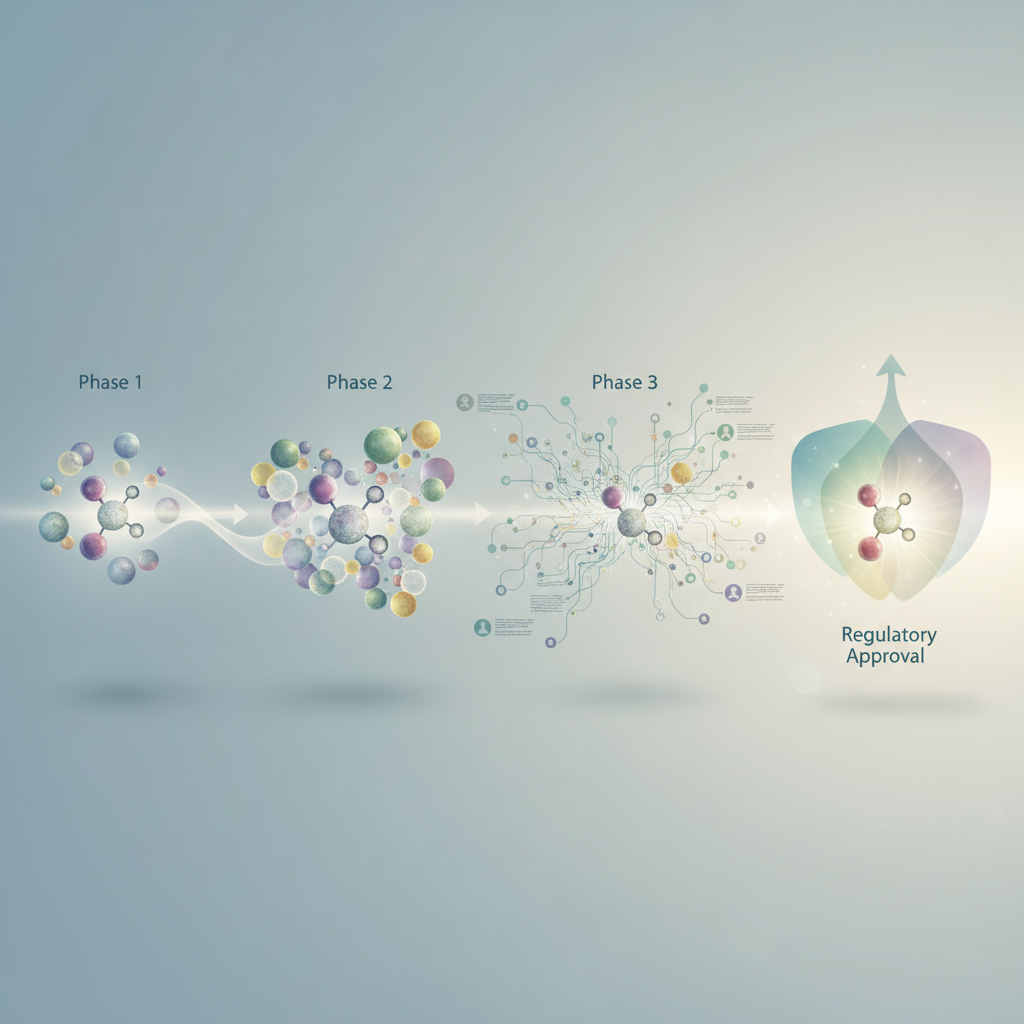
Prostate cancer clinical trials are meticulously designed over several phases, each serving a distinct purpose in bringing new therapies to patients. Phase 1 trials focus on safety and dosage, often involving a small number of participants to identify potential side effects [1]. Phase 2 trials expand to a larger group to evaluate the treatment's effectiveness and further assess safety. Phase 3 trials compare new treatments against standard care to confirm efficacy and monitor adverse events in a much larger patient population [3]. Finally, Phase 4 studies occur after a treatment is approved, continuing to monitor its long-term effects and optimal use. This multi-stage process ensures that any new prostate cancer treatment introduced to the public has been thoroughly vetted for safety and effectiveness, building upon the knowledge gained from each preceding phase.
The Future of Prostate Cancer Treatments in Orange County
Thanks to ongoing clinical research, the landscape of prostate cancer treatment is constantly evolving. In Tustin and the wider Orange County area, patients have access to institutions at the forefront of these advancements, offering hope for improved outcomes.
Emerging Therapies and Technologies
Research in prostate cancer is exploring diverse avenues, including new targeted therapies that home in on specific cancer cell vulnerabilities, immunotherapies that harness the body's own immune system, and advanced radiation techniques. For example, some studies are investigating new imaging agents like Flotufolastat 18F PET for improved detection following focal therapy [8]. Others explore novel drug combinations or alternative hormonal agents [7]. These studies represent the continuum of innovative care that patients in Orange County can access.
The Role of Local Research in Global Advancements
Orange County's research centers, such as the UC Irvine Health Chao Family Comprehensive Cancer Center, are critical nodes in the global effort to combat prostate cancer. Their involvement in studies, like the "Multi-Institutional Registry for Prostate Cancer Radiosurgery (RPCR)" [2], means that local patients contribute directly to the broader understanding and development of new treatments. This local engagement accelerates the pace of discovery, bringing sophisticated options to patients right here in Tustin and beyond. Cancer Answers OC is dedicated to helping you unravel these complexities. Feel free to use our free, private, instant, 24/7 Ask the Assistant chat (floating bottom-right button) to get quick answers and connect with live OC specialists when needed.
Frequently asked questions
How long do prostate cancer clinical trials typically last?
The duration of a prostate cancer clinical trial can vary significantly, ranging from a few months to several years, depending on the phase of the trial and the specific research question. Some studies follow patients for many years to track long-term outcomes.
Will I have to pay to participate in a clinical trial?
Generally, the costs directly related to the experimental treatment and research procedures in a clinical trial are covered by the study sponsor. However, standard medical care costs, like routine doctor visits or standard-of-care treatments, may be billed to your insurance or yourself, similar to non-trial care. Always clarify financial details before enrolling.
Can I continue my current prostate cancer treatment if I join a trial?
This depends entirely on the specific trial's design. Some trials require participants to discontinue or alter their current treatments, while others may test new agents in combination with standard care. This will be clearly explained during the informed consent process.
What if I experience side effects during a clinical trial?
Clinical trial participants are closely monitored for side effects. Any adverse events are promptly reported to the research team, who will assess their severity and determine the best course of action, which may include adjusting the treatment, providing supportive care, or withdrawing from the study. Patient safety is a top priority, and you are encouraged to contact your care team immediately if you experience new or worsening symptoms.
What is the difference between an open trial and a closed trial?
An "open" clinical trial is actively recruiting new participants and is available for enrollment, assuming you meet the eligibility criteria. A "closed" trial is no longer accepting new patients, either because it has met its enrollment goal or has completed the study phase.
How can I get a second opinion on a clinical trial option?
It's always recommended to seek a second opinion when considering complex medical decisions, including clinical trial participation. You can discuss this with your primary oncologist or reach out to other cancer specialists locally, perhaps through institutions like UCI Health or Hoag, which offer second opinion services. Cancer Answers OC can also assist you in finding a /second-opinion specialist in Orange County.
When to call your care team
- If you experience any new or worsening symptoms, especially after starting a new treatment.
- If you have questions or concerns about your treatment plan or clinical trial participation.
- If you are considering joining a clinical trial and want to discuss eligibility or implications.
- If you want to explore all available treatment options, including the possibility of a clinical trial.
- If you need clarification on any aspect of your cancer care or feel overwhelmed.
How Cancer Answers OC can help
At Cancer Answers OC, we understand that a prostate cancer diagnosis brings a flood of questions and concerns. Our mission is to provide clear, evidence-based answers and connect you with the best resources and specialists right here in Orange County, especially in and around Tustin. We can help you navigate the landscape of prostate cancer clinical trials, understand complex medical information, and find local experts. You can explore our dedicated /clinical-trials page for more general information and local listings. For personalized assistance, consider using our free, private, instant, 24/7 Ask the Assistant chat (floating bottom-right button) to get immediate answers, or connect with our live OC specialists when needed. Your journey through cancer care doesn't have to be a solitary one; we are here to support you every step of the way.
Related resources
- Breast Cancer Clinical Trials in Santa Ana: Exploring New Treatment Options
- Unlocking Hope: Clinical Trials for Pancreatic Cancer in Orange County
- Melanoma Clinical Trials in Orange County: A Caregiver's Guide
- Find a cancer specialist in Orange County
- Get a second opinion
- Insurance and coverage guide
Sources
- Study Details | NCT06849258 | ClinicalTrials.gov - Clinical Trials. https://clinicaltrials.gov/study/NCT06849258
- Multi-Institutional Registry for Prostate Cancer Radiosurgery (RPCR). https://clinicaltrials.gov/study/NCT01226004
- Study Details | NCT04831944 | ClinicalTrials.gov - Clinical Trials. https://clinicaltrials.gov/study/NCT04831944
- Study Details | NCT03318809 | ClinicalTrials.gov - ClinicalTrials.gov. https://clinicaltrials.gov/study/NCT03318809
- Chao Family Comprehensive Cancer Center - NCI. https://www.cancer.gov/research/infrastructure/cancer-centers/find/ucirvinechao
- A Randomized, Double-Blinded Trial of Dutasteride Pretreatment. https://pmc.ncbi.nlm.nih.gov/articles/PMC5942221/
- UC Irvine Prostate Cancer Clinical Trials — Orange County, CA. https://clinicaltrials.icts.uci.edu/prostate-cancer
- Utilization of Flotufolastat 18F PET for Post-Focal Therapy Prostate ... https://www.ucihealth.org/clinical-trials/uci-25-100
- Prostate, Kidney and Bladder Cancer Program in Orange County. https://www.providence.org/locations/socal/cancer-orange-county/cancer-programs/prostate-kidney-and-bladder-cancer
- Prostate Cancer Treatment and Diagnosis | Orange County. https://www.hoag.org/programs/prostate-cancer/clinical-trials-research/